
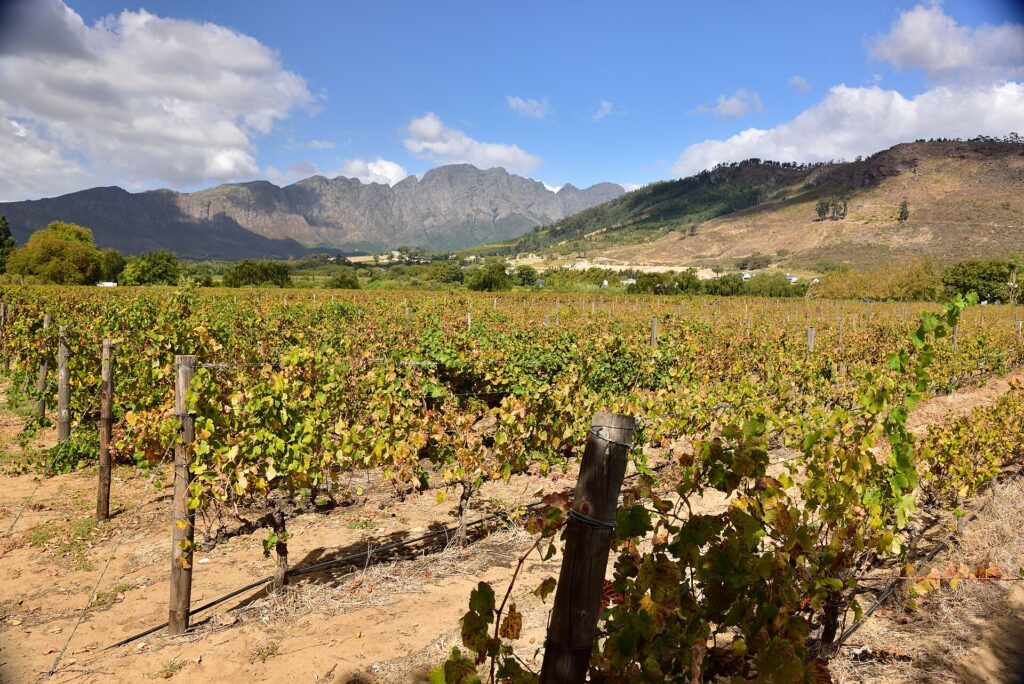
Deciding where to stay in the Cape Winelands is a smaller question than it looks and a more consequential one. The three main towns sit within half an hour of each other, so you are not choosing which estates you can reach. You are choosing what your evenings are like, how much you drive, and whether the place you wake up in is a village, a working town, or something in between.
This is the fourth in our accommodation-decision series, after Cape Town, the Garden Route and the Cape Whale Coast. As with those, it compares bases rather than listing hotels.
In this guide
The short answer
- First visit, or several nights: Stellenbosch. It is the only one of the three that is a real town as well as a wine centre, and the one hardest to regret.
- Food, or a short romantic stay: Franschhoek. Smaller, prettier, more expensive, and the only place where you can visit several estates without anyone driving.
- Quieter, and less shaped by tourism: Paarl. A working town with the best mountain of the three and one of the longest heritage streets in the country.
None of these is universally best, and people who love one often actively dislike another. The rest of this page is the reasoning.
The geography, in one paragraph
Stellenbosch is about 50 km east of Cape Town, and Wesgro puts the drive at around 45 minutes. Franschhoek is roughly an hour from the city and twenty-five minutes from Stellenbosch over the Helshoogte Pass. Paarl is about fifty minutes from Cape Town on the N1, thirty-five from Stellenbosch and half an hour from Franschhoek.
That closeness is the point. Wherever you sleep, the other two towns are a short drive away, and so is most of the wine. What differs is the place itself — and, more than people expect, how much driving your evenings involve.
Live accommodation in the Cape Winelands
The map is centred on Stellenbosch. Drag north-east to Franschhoek or north to Paarl to compare the three towns on your own dates rather than in the abstract.
Affiliate disclosure: the map below is supplied by Stay22 and shows live availability and prices from independent booking sites. Cape Town Travel Guide may earn a commission on a qualifying booking, at no extra cost to you. We do not set these prices, do not take payment, and are not the merchant of record.
Stellenbosch
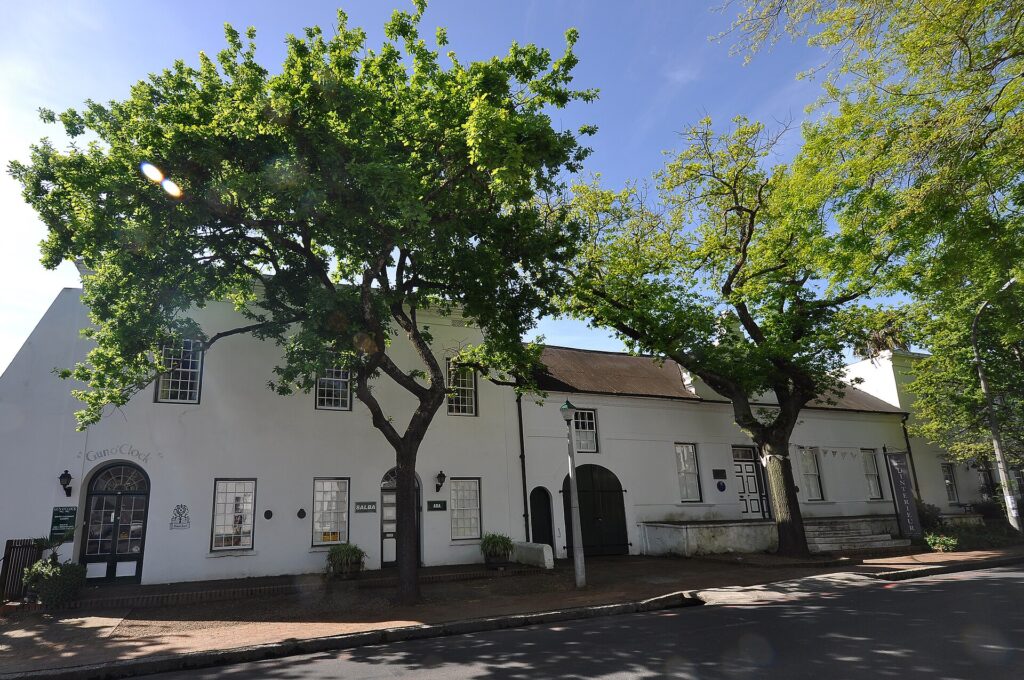
Stellenbosch is the practical answer for most people, and the reason is that it does three things at once that rarely coexist.
What you gain
- A historic town you can walk after dinner. Simon van der Stel named the place in 1679 and it was laid out in 1685, making it the oldest town in South Africa after Cape Town. Dorp Street holds one of the longest surviving rows of period buildings in the country, under oaks. This matters more than it sounds when you are staying rather than visiting: it means the evenings have somewhere to go.
- The broadest restaurant choice of the three, and — because of the university — a good deal of it aimed at residents rather than visitors. You can eat well without booking a fine-dining table.
- The widest wine access anywhere in the Cape. The Stellenbosch Wine Route is South Africa’s oldest and the sheer number of producers means you can build almost any kind of day, from grand historic estates to small modern cellars.
- It works for several nights. Three or four nights here does not run out of things to do, which is not true of the other two.
- It is the best-placed base for onward travel — back to Cape Town, east on the N2 towards the Overberg, or north onto the R62.
The trade-offs
- It is a student town, with the energy and the noise that implies. In term time the centre is busy in a way that some people find lively and others find wearing. Where you book within the town matters.
- The estates are spread across a wide valley system, so you will be driving between them — which makes the designated-driver question unavoidable in a way it is not in Franschhoek.
- It is the busiest of the three in high season, and a stay built around the famous names will feel like queueing.
- It is not romantic in the way Franschhoek is. If that is what you are booking for, this is the wrong town.
Best for: a first Winelands stay, several nights, mixed interests, and anyone who wants the town to be as good as the wine.
Franschhoek
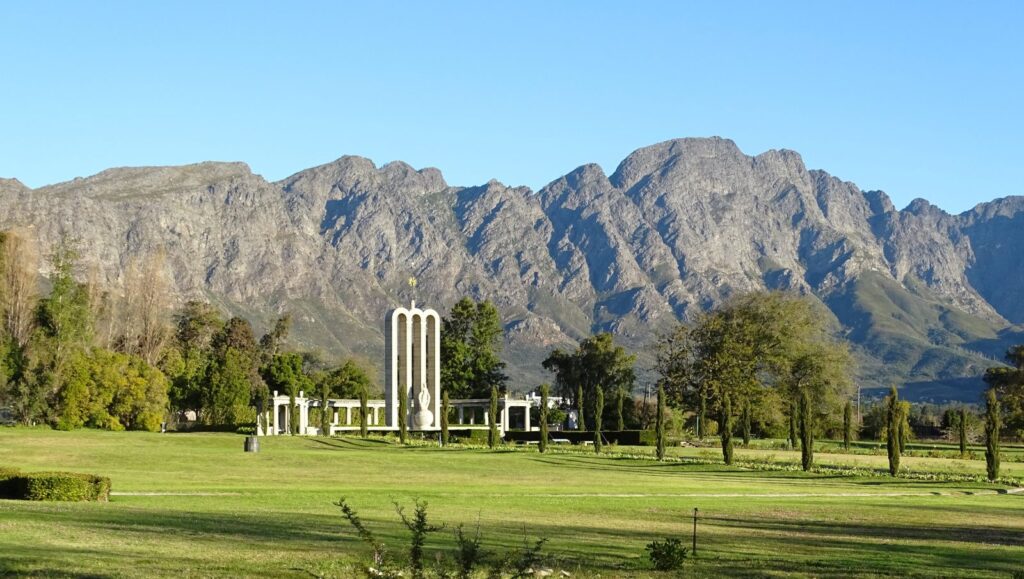
Franschhoek is the smallest and most enclosed of the three: a flat valley floor under vineyards, a wall of mountains on three sides, and one main street running down the middle. It is the town people picture when they picture the Winelands, and staying there is a different experience from visiting for the day.
What you gain
- You can park once and walk. The village is small enough that an evening needs no car at all — which, in a wine region, is worth more than it sounds.
- Food. There are more restaurants per resident here than anywhere else in South Africa, and a great deal of the country’s fine dining happens in this one valley. If the point of the stay is eating, nowhere else competes.
- The setting. One road in, mountains around three sides, vineyards across the floor. It is the most photogenic of the three by some margin.
- A genuine Huguenot history that is present in the place names and the monument at the head of the valley rather than only in the marketing.
- The Wine Tram. This is the practical differentiator. It runs a hop-on hop-off service using a combination of a double-decker tram and an open-sided tram-bus, on several lines, each calling at a selection of estates in the valley. It is the only arrangement in the Winelands that removes driving from the middle of the day rather than just the ends of it — and if you are staying in the village, you can use it without driving at all.
Wine Tram — two things worth knowing, and one we will not publish
Tasting fees are charged by the estates and are not included in the tram ticket, and booking ahead is strongly recommended, particularly for a specific line and departure. Lines, stops, departure patterns and prices change often enough that publishing them here would mislead you, so we do not — check the operator’s current information instead.
The trade-offs
- It is small, and it is the most tourism-shaped of the three. Outside the main street there is not much that is not wine or food. A long stay can start to feel like a set.
- Tourism intensity is high, and in peak season the village is busy in proportion to its size — which is a different and more concentrated kind of busy than Stellenbosch.
- Demand is seasonal and sharp. Summer weekends and holidays fill early, and the village has fewer beds to absorb it.
- Getting beyond the village means driving, and it is a dead-end valley — you leave the way you came unless you take the longer Franschhoek Pass. That makes it the least convenient of the three as a touring base.
- It is the most expensive of the three for comparable accommodation, which is a consistent enough pattern to be worth saying.
Best for: two or three nights, food-led trips, couples, and anyone who would rather not drive between estates.
Paarl
Paarl is the largest of the three main Winelands towns and the one visitors most often skip. It deserves better than being treated as the fallback, and the case for it is not that it costs less — it is that it is a different kind of place.
What you gain
- A town that is a town. Paarl is a working place of about a hundred thousand people that happens to make wine, rather than a wine village that happens to have residents. It is less curated and more ordinary than Franschhoek, and for some travellers that is exactly the appeal — you are staying somewhere with its own life rather than somewhere arranged around your visit.
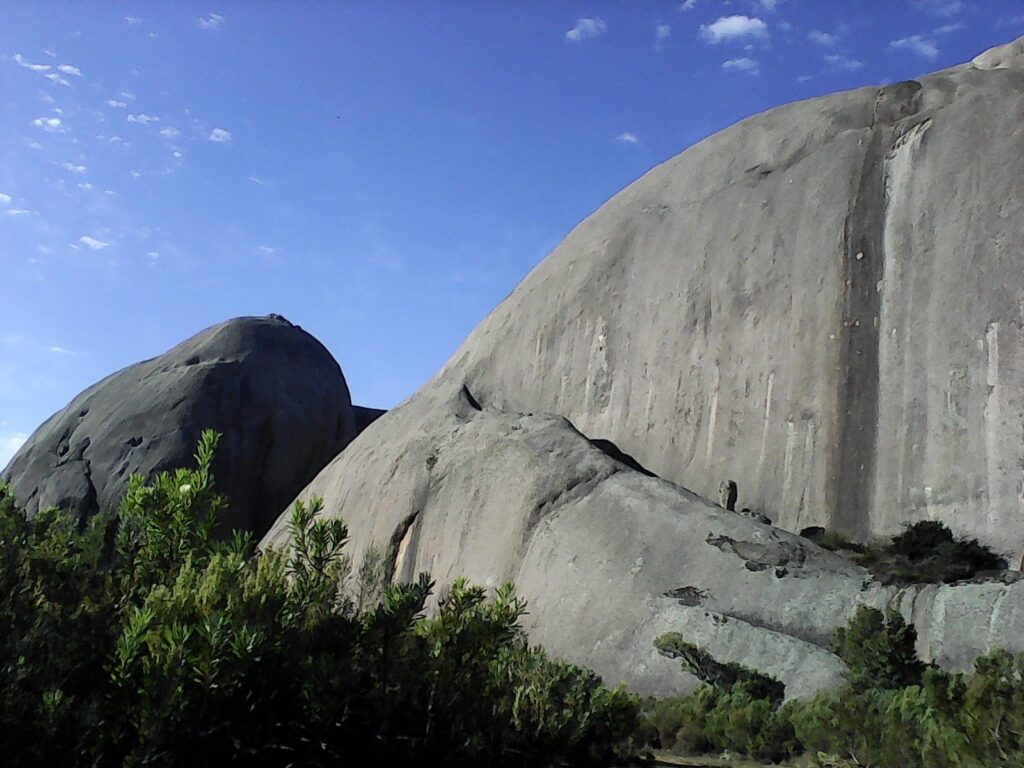
- Paarl Mountain. Three enormous granite domes rise straight out of the town and give it its name. This is the best walking of the three towns by a distance, and having a mountain reserve on your doorstep changes what a Winelands stay can be — a morning walk, then wine, rather than wine and more wine.
- One of the longest heritage streets in South Africa, running the length of the town.
- Wine and brandy. Paarl is a serious wine district in its own right, and it is also brandy country, which is a genuinely different thing to taste and is not really available in the other two.
- Position. It is half an hour from Franschhoek, thirty-five minutes from Stellenbosch and close to Wellington, so it works as a touring base for the whole region. On the N1 it is also the most convenient of the three if you are heading north or on towards the R62.
The trade-offs
- Fewer visitors means fewer visitor-facing restaurants. The evening choice is narrower than Stellenbosch and much narrower than Franschhoek.
- It is a spread-out town rather than a compact centre, so more of your day involves the car than in either of the others.
- If wine access alone is the measure, Stellenbosch simply offers more.
- It is not the romantic option, and it does not pretend to be.
On price
Paarl is frequently described as the cheaper Winelands base. We are not going to put a number on that, because accommodation pricing moves by season, by property and by how far ahead you book, and any comparison we published would be out of date quickly. Compare like-for-like on your own dates rather than trusting a general claim — including ours.
Best for: a quieter stay, walkers, second visits, brandy, and travellers who would rather be somewhere real than somewhere pretty.
Featured places to stay
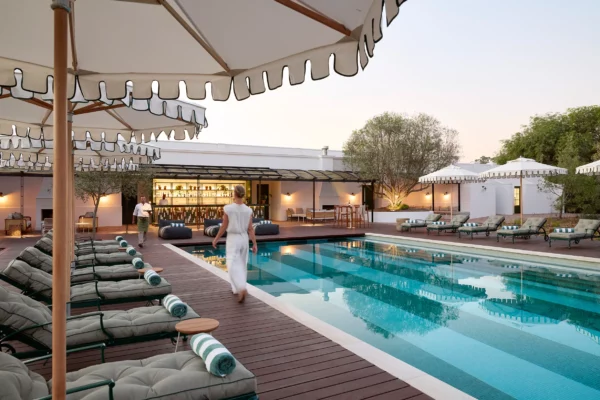
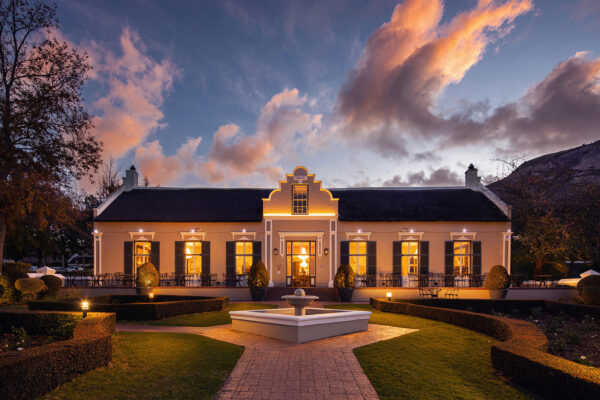
Eight Cape Winelands properties we have written up individually. Each page explains what the property is, who it suits and where it falls short, and links through to live availability. We do not set prices or take bookings.




Why Constantia is not on this list
Constantia is a serious wine area — wine has been made there since 1685, and it is the oldest continuously producing wine region in the southern hemisphere. It is left out of this comparison for one reason: it is inside Cape Town.
It sits fifteen to twenty minutes from the City Bowl, on the wooded eastern slopes below the back of Table Mountain. Staying there is therefore a Cape Town accommodation decision, not a Winelands one — you are choosing a leafy southern suburb of the city, with the city’s restaurants, beaches and airport in reach, rather than choosing a wine town to base a Winelands trip in.
That makes it an excellent half-day or full-day wine destination and a poor comparison point for Stellenbosch, Franschhoek and Paarl. If your trip has no room for nights in the Winelands, Constantia is the answer — but it answers a different question. See the Cape Winelands day trip guide for when to choose it over the three towns, and where to stay in Cape Town for Constantia as a place to sleep.
Which base suits you: where to stay in the Cape Winelands
These are our recommendations, not universal facts. No town here is best for everyone, and the differences are real enough that the wrong choice is a noticeably worse holiday.
| If your priority is… | Base to consider | Why |
|---|---|---|
| A first Winelands visit | Stellenbosch | The only one that gives you a historic town and a major wine region together, so the stay works even on a bad wine day. |
| Food above everything | Franschhoek | More restaurants per resident than anywhere else in South Africa, in a village you can walk home across. |
| A historic centre to walk | Stellenbosch | Dorp Street and the oak-shaded core; the oldest town in the country after Cape Town. |
| Using the Wine Tram | Franschhoek | It is the only base from which you can use it without driving to it first. |
| A romantic short stay | Franschhoek | Small, enclosed, walkable and unusually good at two-night stays. |
| The widest restaurant choice | Stellenbosch | Breadth rather than height — more places, more price points, more of it aimed at locals. |
| Three or more nights | Stellenbosch | The only one of the three that does not run out of things to do. |
| A quieter, less tourism-shaped stay | Paarl | A working town with its own life, and the mountain on the doorstep. |
| Walking and the outdoors alongside wine | Paarl | Paarl Mountain’s granite domes are the best walking of the three by a distance. |
| The easiest onward road trip | Stellenbosch, or Paarl | Stellenbosch for the N2 and the Overberg; Paarl for the N1, the R62 and anywhere north. |
| No overnight in the Winelands at all | Constantia, from a Cape Town base | Fifteen minutes from the City Bowl, and a genuine wine valley rather than a consolation. |
Editorial view. For a first Winelands stay of two or three nights we would book Stellenbosch — it is the hardest to regret, because even a disappointing wine day there is still a good evening in a beautiful old town. For a two-night food trip, or a couple who want to walk home from dinner, Franschhoek, using the tram. On a second visit, or for anyone who found Franschhoek too polished and Stellenbosch too busy, Paarl — and we would go for the mountain as much as the wine.
Once you have chosen
The three towns are close enough that you will see all of them whichever you sleep in — so book the one whose evenings you want, then search within it rather than across the region.
Once you have chosen a town
Filter to the town you settled on above rather than searching the whole region, and compare what is actually available on your dates. Franschhoek has the fewest beds and fills first; harvest season and summer weekends go early everywhere.
Compare Cape Winelands staysAffiliate link — we may earn a commission if you book through it, at no additional cost to you.
What to do next
- Cape Winelands tours — guided day tours, if you are day-tripping rather than staying.
- Stellenbosch, Franschhoek and Paarl — the destination guide for whichever town you chose.
- Cape Winelands — the region as a whole, including the passes and the towns this page leaves out.
- Cape Winelands day trip — if you decide not to stay at all, this covers which area to visit from Cape Town.
- Constantia — the wine valley inside the city.
- Where to stay in Cape Town — the neighbourhood decision, including Constantia.
- Where to stay in the Western Cape — how booking works across the province.
- 14 days: the Western Cape road trip — where two Winelands nights sit in a full trip.
- Travel planning — seasons, costs and what to pack.
Sources
- Franschhoek Wine Tram — how the hop-on hop-off service works, and booking.
- Wesgro — the Western Cape tourism and investment agency, for regional distances and drive times.
- Arrive Alive — South African road safety and drink-driving law.
Browse Winelands accommodation by town
Stellenbosch · Franschhoek · Paarl
Each town page carries a short orientation and a live availability map. See also Winelands or Whale Coast? and when to book.