
Things to Do in the Western Cape
Hiking, wine, whales, wildflowers, heritage and coastline — organised by what you actually want to do rather than by where it happens to be.
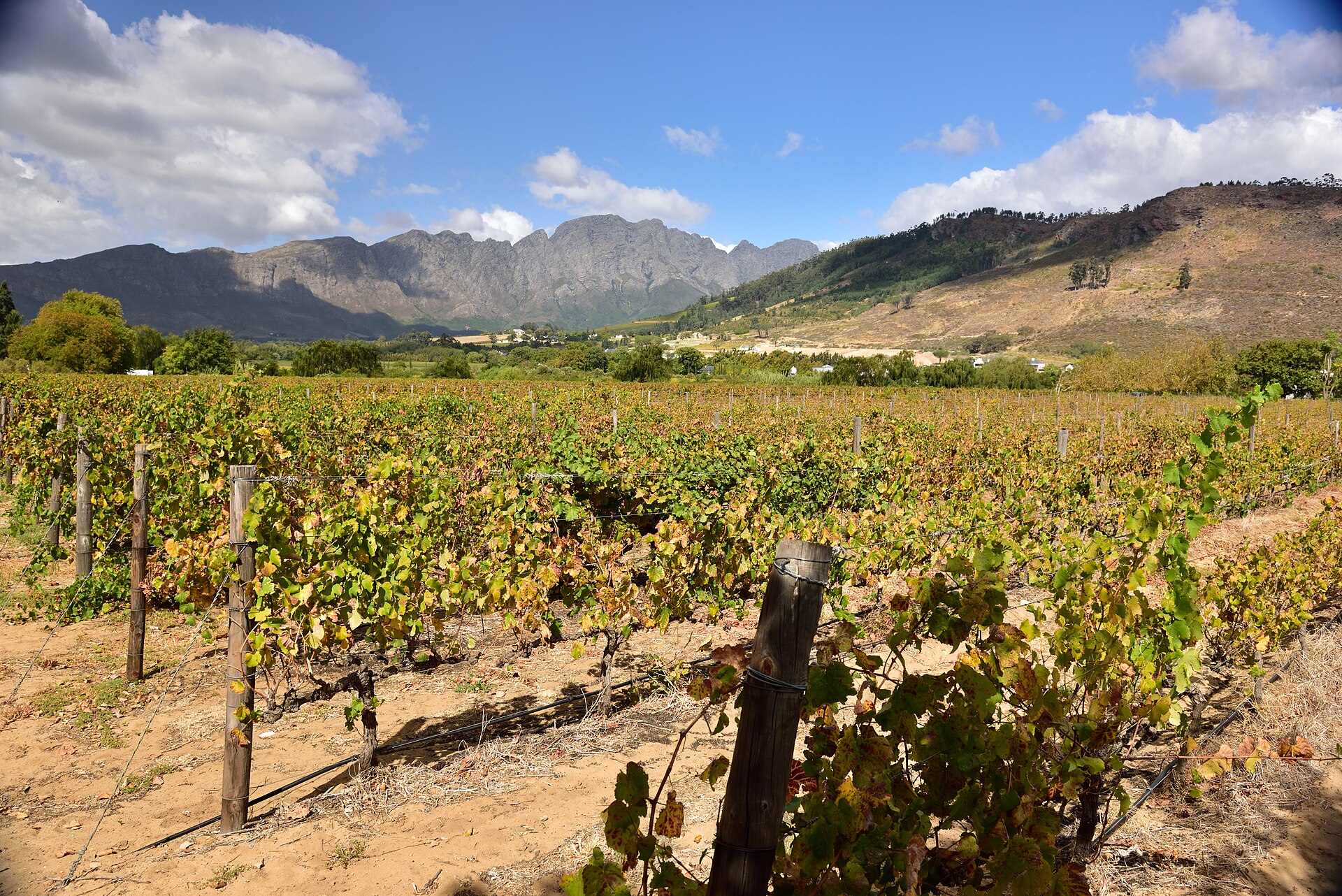
Hero image: Franschhoek vineyard, Western Cape, South Africa (20319683579).jpg by South African Tourism, CC BY 2.0, via Wikimedia Commons.
The best things to do in the Western Cape divide fairly neatly into six kinds of experience: mountain and coastal walking, wine and food, marine wildlife, heritage and history, scenic driving, and the seasonal set-pieces of whales and wildflowers. Most trips end up mixing three or four of them.
This page is organised by activity so you can work out what to prioritise, then follow the links through to the region or destination where each is best done.
Things to do in the Western Cape: in this guide
Hiking and the outdoors
The Western Cape is one of the better hiking destinations in the southern hemisphere, largely because the mountains come right down to the sea and the fynbos is extraordinary. The province sits within the Cape Floral Region, a UNESCO World Heritage Site made up of thirteen protected-area clusters.
- Table Mountain — Platteklip Gorge is the direct route up; Skeleton Gorge climbs through forest from Kirstenbosch. Both are proper hikes with real weather risk.
- Lion’s Head — the best short hike in Cape Town, about an hour up, with some minor scrambling.
- Jonkershoek, behind Stellenbosch — serious mountain walking and trail running in a CapeNature reserve.
- The Cederberg on the West Coast — the Wolfberg Cracks and Arch, the Maltese Cross, and world-class bouldering at Rocklands.
- Tsitsikamma and Knysna forest on the Garden Route — indigenous forest and the Otter Trail, which books far ahead through SANParks.
- De Hoop in the Overberg — the Whale Trail along an undeveloped coastline.
Wine and food
The Cape Winelands are the obvious focus, and the Stellenbosch Wine Route — founded in 1971 and the oldest in the country — is the place to start. Around 200 producers fall within the Stellenbosch appellation and more than 150 open for tasting. Franschhoek is more restaurant-led; Paarl is larger and less polished; the Helderberg is cooler and quieter.
Beyond the classic Winelands: Constantia is Cape Town’s own wine valley and a short drive from the city; Route 62 through Robertson, Montagu and Barrydale is an inland alternative; Calitzdorp in the Klein Karoo is known for fortified wines; and Elgin, in the Overberg hills, produces cool-climate whites and Pinot Noir.
On the food side, Cape Town’s restaurant scene is genuinely strong, the Oranjezicht City Farm Market at the Waterfront is worth a morning, and Cape Malay cooking is a distinct tradition worth seeking out through a Bo-Kaap cooking class rather than a generic tour.

Marine wildlife
Southern right whales come inshore along the southern Cape coast from roughly June to November, peaking July to October, and the shore-based watching at Hermanus is genuinely world-class — you do not need a boat. Humpbacks migrate through and Bryde’s whales are resident. Dolphins are seen year-round.
The African penguin colony at Boulders near Simon’s Town is the other headline marine attraction. It matters more than it used to: the species was reclassified as critically endangered in late 2024, with fewer than 10,000 breeding pairs remaining. Stay on the boardwalks and never touch or feed the birds.
Cape fur seals are visible at the V&A Waterfront quaysides and at Duiker Island off Hout Bay. Official advice is straightforward: never approach a seal.
Heritage and history
This is the part of a Western Cape trip most easily skipped and most worth keeping. In Cape Town: Robben Island, a UNESCO World Heritage Site, reached by ferry from the Nelson Mandela Gateway; the District Six Museum, which works with the memory of forced removals and requires booking; the Iziko museums including the Slave Lodge and the South African Museum; the Castle of Good Hope; and Bo-Kaap, which is a living neighbourhood rather than an attraction.
Outside the city: Cape Dutch architecture in Stellenbosch and the Village Museum’s four period houses; the Huguenot history of Franschhoek; San rock art in the Cederberg; the preserved fishing village of Kassiesbaai at Arniston; and Victorian Matjiesfontein in the Karoo.

Scenic driving
Driving is an activity here rather than just transport. The essential routes: the Cape Peninsula loop including Chapman’s Peak Drive and Cape Point; Clarence Drive along the coast to Rooi-Els; the Swartberg Pass between Oudtshoorn and Prince Albert, gravel and spectacular; Bain’s Kloof from Wellington; Helshoogte between Stellenbosch and Franschhoek; and Route 62 as an inland alternative to the N2. The self-drive guide covers conditions and closures.
Beaches and water
The two Cape Town coasts are very different. The Atlantic side — Clifton, Camps Bay, Llandudno — is spectacular and genuinely cold because of the Benguela current. False Bay — Muizenberg, Fish Hoek, St James — is noticeably warmer and better for swimming and learning to surf. Muizenberg is the standard beginner surf break.
Elsewhere: long empty beaches at Paternoster and on the Agulhas plain, the sheltered turquoise water of Langebaan Lagoon, and the lagoons and estuaries of Wilderness and Knysna for canoeing and paddling.
Seasonal set-pieces
Two experiences are worth planning a whole trip around. Wildflowers on the West Coast, roughly August to September, depend entirely on the preceding winter’s rain — decide your route close to the time. Whales in the Overberg, roughly June to November. Both are genuinely exceptional and neither can be guaranteed.

Stargazing
The Cape Karoo has some of the darkest, clearest skies accessible from a major city anywhere. Prince Albert and several Karoo towns offer guided stargazing. It costs almost nothing and is one of the most memorable things in the province.

Looking for adventure rather than sightseeing? Shark cage diving, whale boats, sea kayaking, paragliding, dune riding and surfing each have their own page, with what the activity involves, who it suits and what to check before booking: Western Cape adventure activities.
Read next
- Robben Island tours — ticket, transfer and combination products compared.
- Table Mountain tours and experiences — what a cableway ticket buys, and which guided formats are worth it.
- Cape Town with kids — what actually works with children, how age changes the plan, and wet-weather fallbacks.
- Hiking Table Mountain — what the main routes really involve, the weather, and the mistakes that catch people out.
Official sources for things to do in the Western Cape
Opening hours, entry fees, permit rules, park closures and seasonal access all change, and we do not republish them here as fixed facts. Before you travel, check the operators and conservation authorities directly:
- Cape Town Tourism — attractions, events and seasonal listings.
- CapeNature — reserve access, hiking permits and conservation fees.
Match activities to a region
Work out which regions fit your priorities, then build the route.