
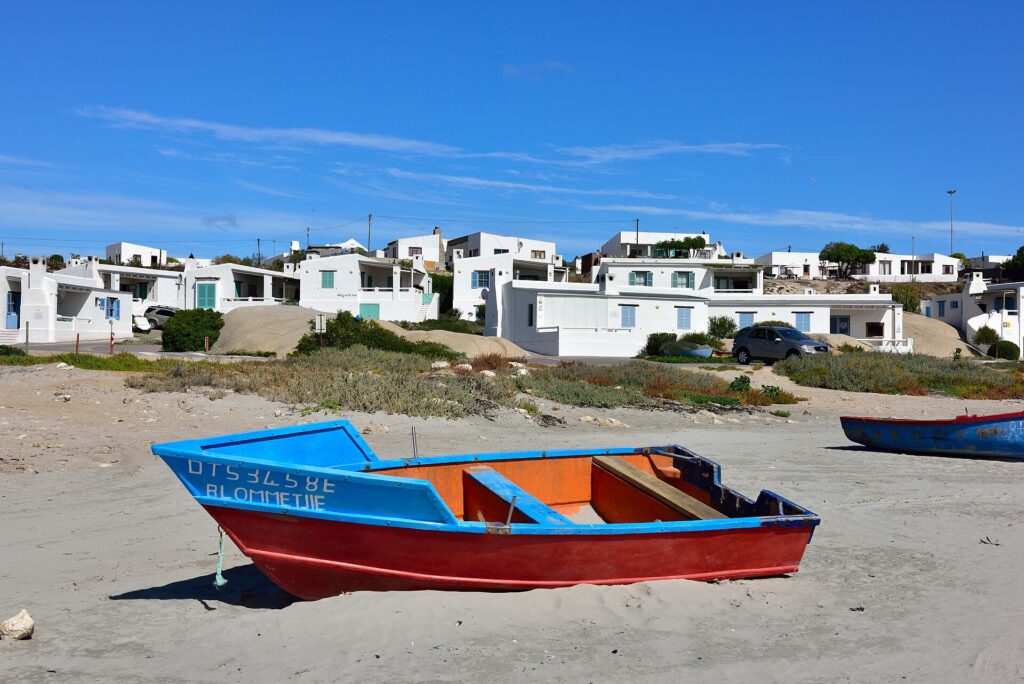
Hero image: South African Tourism, CC BY 2.0, via Wikimedia Commons
Paternoster is the most photographed village on the West Coast and one of the most misunderstood. The whitewashed cottages, the black-hulled boats pulled up on the sand and the enormous empty beach are all real. So is the fact that this is a working fishing community with a difficult economy, and that a good proportion of the picture-perfect cottages are recent holiday houses built to match.
It sits about two hours north of Cape Town on the Cape West Coast, forty-five minutes beyond Langebaan, on a bay that faces west into the cold Atlantic.
In this guide
Paternoster in brief
- What it is — a small West Coast fishing village that has become a food and weekend destination.
- Known for — whitewashed cottages, a long white beach, crayfish and mussels, and a concentration of very good restaurants.
- Also here — Cape Columbine Nature Reserve and its lighthouse, immediately south-west of the village.
- Time needed — a night. It is too far for a comfortable day trip and the point of the place is the evening.
- The water — cold Atlantic. Wading and walking rather than swimming.
- The wind — blows hard here, particularly in summer afternoons.
The village, honestly
Paternoster has been a fishing settlement for a long time and the fishery is still the reason most residents are here. Boats go out for snoek, crayfish and line fish; the catch is landed on the beach and sold at the roadside; and the rhythm of the village follows the sea rather than the visitors.
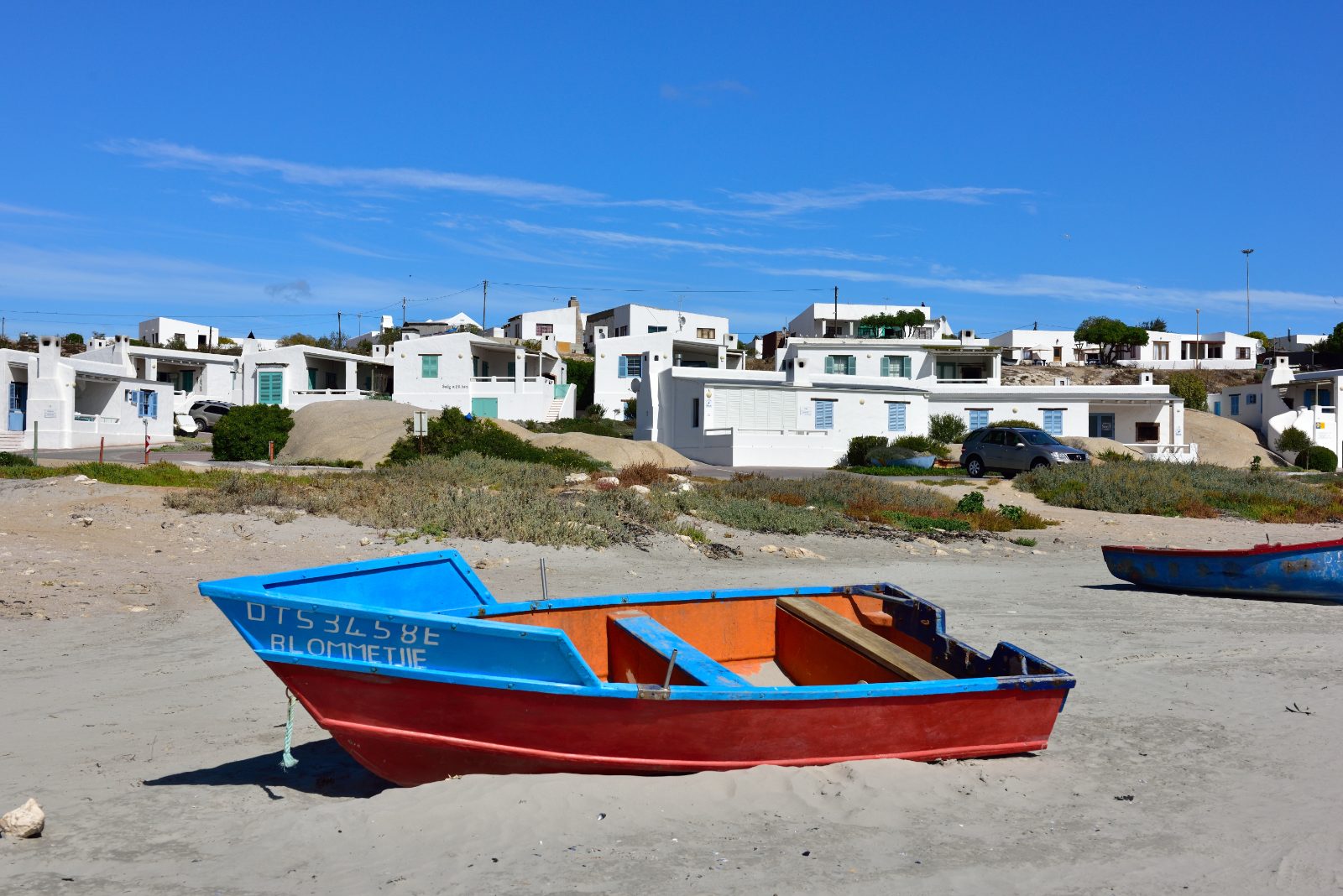
Alongside that, over the last two decades, the village has become a weekend destination. New holiday houses have gone up in the same whitewashed vernacular, restaurants have opened, and property prices have moved a long way beyond what a fishing household can afford. Both things are true at once, and the interesting version of Paternoster is the one that notices the difference.
A note on the buildings: the whitewashed cottage style is genuine West Coast vernacular, but do not assume every example of it is old. A great many are new builds in a controlled architectural idiom. The older fishermen’s cottages are generally smaller, plainer and closer to the beach.
And on photography: the boats on the sand and the houses behind them belong to people who live and work here. Photograph the village; ask before photographing individuals, their homes or their catch; and buy from the people whose picture you are taking.
Cape Columbine and Tietiesbaai
Immediately south-west of the village, Cape Columbine Nature Reserve covers 263 hectares of rocky coastline and strandveld. Saldanha Bay Municipality, which runs it, dates the reserve to December 1973. It is the best reason to be here beyond the food and the beach.
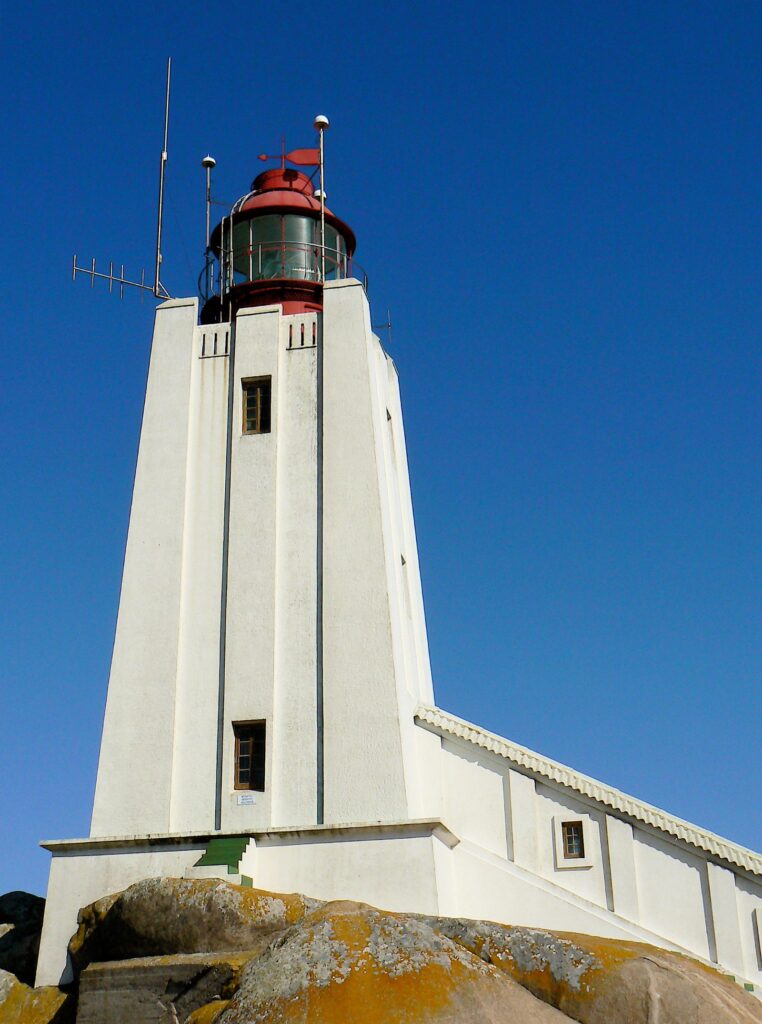
The Cape Columbine lighthouse stands on Castle Rock inside the reserve. The Western Cape Government describes it as the last manually controlled lighthouse to be built in South Africa, completed in 1936, standing 80 metres above sea level. Transnet National Ports Authority, which operates South Africa’s lighthouses, also lets out self-catering cottages here — although at the time of writing its Cape Columbine page was unreachable, so confirm directly before planning a stay around it. You will see the claim that this is the only manned lighthouse in the country; that is a different assertion from the provincial one, and the port authority publishes neither.
Tietiesbaai, in the reserve, is a campsite and rocky bay that is one of the more atmospheric places to sleep on this coast. The municipality lists sixty sites for up to six people each, on grass and ground cover, with flush toilets, solar-heated showers and water, and no power points. Bring your own braai equipment. Access is on gravel suitable for a sedan or a caravan, day visitors are capped at 150, and the maximum stay is eight weeks.
- Walking — trails along the rocky coast, best in the early morning or the last hour of light.
- Sea kayaking — run from the village and the reserve; conditions dependent.
- Fishing and crayfish — permitted with a valid permit. The municipality is explicit that no fish bait or seafood may be removed from the rocks.
- Sunsets — the reserve faces west into the Atlantic, and this is the single best thing it offers.
The beach and the water
Paternoster’s main beach is long, white and shallow-shelving, and it goes on for a considerable distance north of the village with almost nobody on it. It is a superb walking beach.
It is not a swimming beach in any comfortable sense. This is the Benguela coast: the water is cold all year, and there are no lifeguards. People do go in, briefly. Children paddle. Treat it as scenery and exercise rather than a swimming pool, and keep an eye on the surf and the wind.
Eating
Food is the main reason a lot of people drive two hours to get here. Paternoster has an unusual concentration of serious kitchens for a village its size, running from open-fire West Coast cooking to a tasting-menu restaurant that draws people from Cape Town for a single meal. There is also the older tradition of the strandloper-style beach feast — a long sequence of seafood courses cooked over open fires on the sand.
- Book. The good places fill weeks ahead for weekends and school holidays, and several open only on certain days.
- Crayfish is seasonal and regulated. West Coast rock lobster is subject to a recreational season, permits and bag limits, and the resource is under real pressure. Buy from licensed sellers and restaurants, and do not buy from anyone offering it out of season or out of a car boot.
- Mussels, snoek and line fish are the everyday West Coast plate and are often better value than the crayfish.
- Lunch is easier to get than dinner and is the better meal if you want the view.
Getting there and around
By car — the R27 north from Cape Town, then the R45 through Vredenburg, about two hours. The last stretch is straightforward tar. There is no useful public transport.
In the village — walk. Paternoster is small and the streets are sand or gravel in places. Cape Columbine and Tietiesbaai need a car, and the reserve roads are gravel.
Supplies — Vredenburg, fifteen minutes inland, has the supermarkets and fuel. The village itself has limited shopping.
When to come
- September to November — spring. Flowers on the West Coast, calmer weather than midsummer, and long light.
- December to February — hot, very windy in the afternoons, and full of South African holidaymakers. Book everything.
- March to May — the quiet sweet spot. Warm days, less wind, restaurants still open.
- June to August — cold, wet and stormy, which some people come for specifically. Several restaurants reduce hours.
Paternoster on a West Coast road trip
Paternoster is not really a day trip from Cape Town, and treating it as one is the commonest planning mistake. The drive is around two hours each way on good roads, which is technically manageable — but the village’s whole appeal is the evening: the light going down over the Atlantic, a long slow dinner, and the place emptying of day visitors. Arrive at eleven and leave at four and you will have seen the cottages and missed Paternoster.
It works far better as one leg of a West Coast run. The natural shape is Cape Town to Langebaan for the lagoon and, in season, the West Coast National Park; then north to Paternoster for a night; then either back down the R27 or onward into the Cederberg if you have more days. Two nights on the coast lets you give Langebaan a morning and Paternoster a full afternoon and evening, which is about the right weighting — Langebaan is the bigger, busier place with more to do on the water, and Paternoster is where you stop moving.
If you are coming in flower season, roughly August into September, the calculation changes. The displays are concentrated inland and in the reserves rather than in the village, they depend heavily on the preceding winter’s rainfall, and SANParks is clear that they vary from year to year. Build the trip around a good stretch of days rather than one booked date, and treat the flowers as a bonus on a coast that is worth the drive regardless.
One practical note on timing. Paternoster’s restaurants are the main reason many people come, several are small, and the good ones book out at weekends well in advance. Sort dinner before you sort anything else — including, on a Saturday in summer, before you assume you will find a table at all.
Where to stay in Paternoster
Check availability in Paternoster
Paternoster is small and its stock is mostly guesthouses, self-catering cottages and a few boutique properties. Weekends and the summer holidays go early, and the village does not have the capacity to absorb late decisions.
See Paternoster stays on Booking.comAffiliate link. We may earn a commission if you book through it, at no additional cost to you. See our affiliate disclosure.
Paternoster is an overnight destination, not a day trip. Two hours each way plus a long dinner does not work as a day, and the village is at its best in the evening and at first light.
Accommodation is almost entirely self-catering cottages and small guesthouses, most of them in the whitewashed style, plus a small number of boutique hotels. Beachfront addresses cost more and are worth it here because the beach is the view. Tietiesbaai in Cape Columbine Nature Reserve is the camping alternative — spectacular, exposed and without power.
Weekends and December book out well in advance. Midweek outside the holidays is quiet and considerably cheaper.
Nearby, and what to do next
- Clanwilliam — inland on the N7, for rooibos country, the flower season and the road into the mountains.
- The Cederberg — the mountain wilderness behind the coast, with rock art, bouldering and current access restrictions.
- Langebaan — forty-five minutes south, for the lagoon and West Coast National Park.
- Cape Columbine Nature Reserve and Tietiesbaai — five minutes from the village.
- St Helena Bay — north around the point, a working fishing and processing town.
- Vredenburg — the service town inland, for anything practical.
- West Coast Fossil Park — near Langebaanweg, on the way back south.
- Cape West Coast overview — how the region fits together, including the Cederberg and the flower routes further north.
Planning the wider trip: our Cape West Coast regional guide covers the coast either side of Paternoster, Self-Drive Western Cape deals with the driving, Where to Stay in the Western Cape sets out how accommodation works across the province, and Things to Do covers the rest. If you want a route rather than a single stop, start with our Western Cape itineraries.
Practical notes
- Wind — strong and reliable in summer afternoons. Book a sheltered table.
- Cold water — there are no lifeguards. Do not swim out.
- Gravel — the reserve roads and some village streets. Fine in a normal car, slowly.
- Cash — useful for roadside catch and small traders, though cards are widely taken now.
- Support the village — buy fish and crayfish from licensed local sellers rather than bringing everything with you. The fishery is the reason the place exists.
Official sources
- Saldanha Bay Municipality — Cape Columbine Nature Reserve and Tietiesbaai — the reserve, the lighthouse, camping and access rules.
- Saldanha Bay Municipality — Paternoster — the official municipal page for the village.
- Cape West Coast Tourism — the regional destination body.
- Department of Forestry, Fisheries and the Environment — West Coast rock lobster seasons, permits and bag limits.
- CapeNature — reserves and permits elsewhere on the West Coast.
Where to stay, and what to book
Our Paternoster accommodation page carries a short orientation to the area and a live availability map.