

Hero image: Photo: flowcomm / Wikimedia Commons, CC BY 2.0
Beaufort West is the largest town in the Great Karoo and, for most South Africans, a name attached to a fuel stop. That is an accurate description of how the town is used and a poor description of what is actually there: a district proclaimed in 1818, a three-building museum complex on Donkin Street, and a 90,000-hectare national park on the doorstep that the N1 traffic drives straight past at 120 km/h.
This page is written for the decision most travellers are actually making — stop for an hour, stay a night, or stay two. The honest answer turns almost entirely on whether you go into Karoo National Park, so that is where most of this guide sits.
Beaufort West is on Phase 1 water restrictions — status checked 20 August 2026
The municipality imposed Phase 4 restrictions on 1 March 2026 and relaxed them to Phase 1 with effect from 1 June 2026 (Notice 102/2026).
Relaxed is not lifted. Water is still being actively managed, restrictions can be tightened again, and the sensible Karoo courtesies apply — short showers, no baths, and do not wash the car at your guesthouse. Confirm the current phase with Beaufort West Municipality before booking a long stay.
In this guide
- Beaufort West in brief
- The town
- The museum complex and Chris Barnard
- Karoo National Park
- Wildlife, and an honest note about lions
- Fossils and the Karoo Supergroup
- Driving, walking and cycling in the park
- Water in Beaufort West
- Getting to Beaufort West
- When to come
- Where to stay in Beaufort West
- Nearby, and what to do next
- Practical notes
- Official sources
Beaufort West in brief
- Region — Cape Karoo, Western Cape; Central Karoo District.
- Why come — Karoo National Park, the Beaufort West Museum complex, and a working Karoo town rather than a bypass.
- Time needed — one night at minimum. Two if you want to drive the park properly rather than glance at it.
- Getting there — Cape Town to Beaufort West is about 462 km, roughly 5h13 of free-flow driving before you add stops.
- Nearest guide town — Prince Albert, about 146 km away.
- Watch for — municipal water restrictions, and the national park start-time cut-offs for its 4×4 routes.
The town
The district was proclaimed in 1818 by the governor, Lord Charles Somerset, who named it after his father, the fifth Duke of Beaufort. The “West” was added in the 1860s once there was a second Beaufort in the country to be distinguished from. Both Beaufort West Municipality and the Western Cape Government describe the town as the oldest municipality in South Africa, dating that status to a proclamation of 3 February 1837 — we pass that on as their claim rather than as an independently settled fact, because municipal age depends heavily on what you count.
What you see today is a long, wide main street running parallel to the N1, with a church spire at the centre of it and pepper trees down the pavements. Donkin Street holds most of what is worth walking. It is not a manicured heritage village in the Prince Albert mould, and it does not pretend to be — it is a service town for an enormous, thinly populated district, and the interest lies in that rather than in prettiness.
The museum complex and Chris Barnard
The Beaufort West Museum at 89 Donkin Street is a complex of three buildings, all of them declared national monuments: the old Dutch Reformed Mission Church, its parsonage, and the town hall of 1866. It has been a province-aided museum since 1 April 1977 and is operated by the Western Cape Government.
Christiaan Barnard was born in Beaufort West on 8 November 1922, the son of the mission church minister, and performed the world’s first successful human heart transplant at Groote Schuur Hospital in Cape Town on 3 December 1967. There is no separate Chris Barnard Museum, whatever you may read elsewhere. The Barnard collection sits inside the Beaufort West Museum complex, and the parsonage in which he was born has been restored and furnished as it was in the Barnards’ time. That parsonage is the reason to go in.
Published hours are Monday to Friday 08:00 to 16:30 and Saturday 09:00 to 13:00, with admission around R100 for adults and R55 for children. We are giving you those figures with a caveat: the provincial facility listing they come from was last updated in September 2022. Phone 023 415 2308 before you plan a morning around it.
Karoo National Park
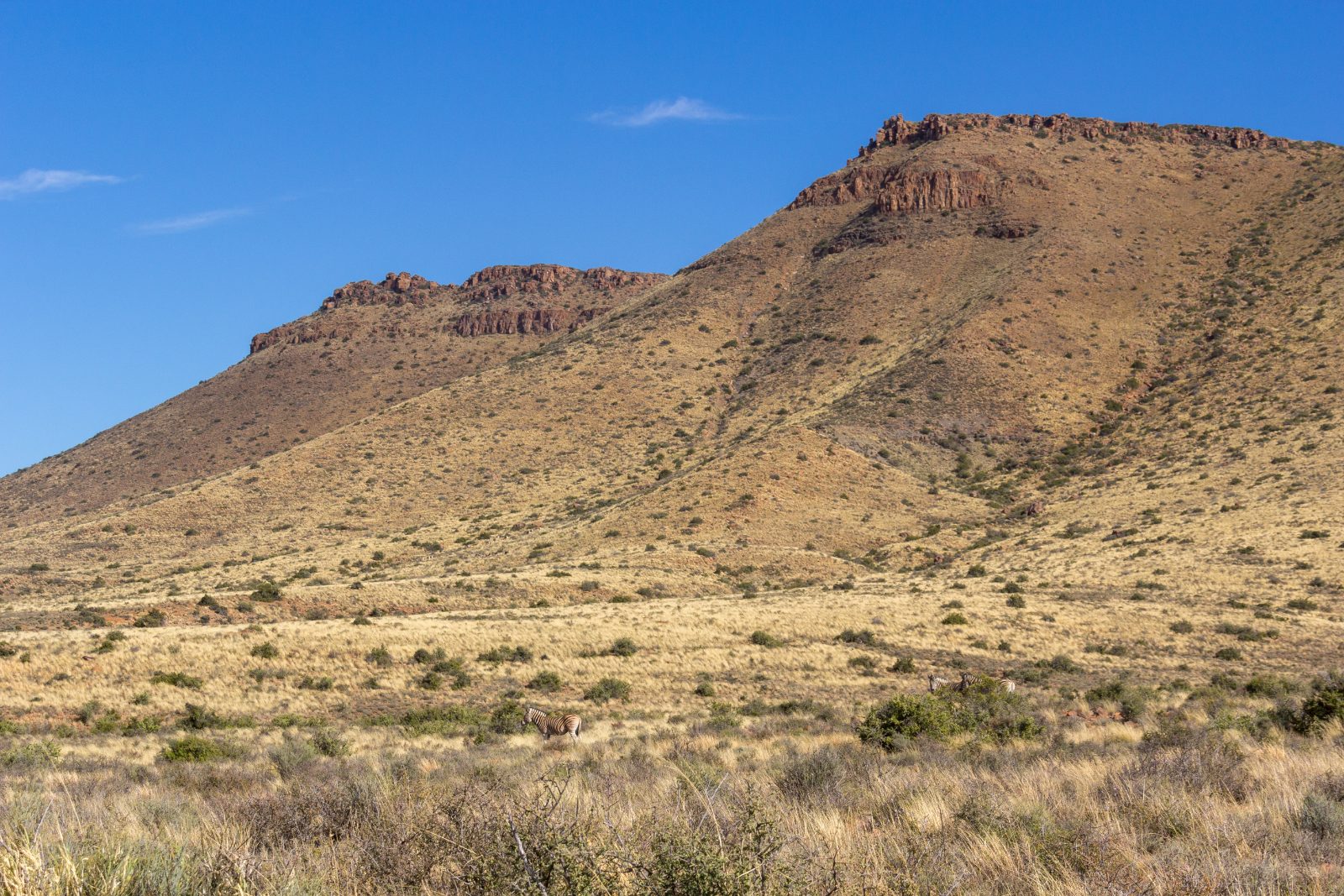
Karoo National Park was proclaimed in 1979, in Government Gazette 6648 of 7 September that year, around a nucleus of 7,209 hectares donated by the Beaufort West Town Council. It now covers roughly 90,535 hectares and the rest camp opened in 1989. Its significance is that it protects the Nama-Karoo biome — a vegetation type that covers a very large part of South Africa and is represented in remarkably few large conservation areas.
The gate is a few minutes off the N1, which is what makes it unusually easy to add to a long drive. Day visitors do not need to book. Overnight guests stay in Cape Dutch-style cottages at the main rest camp or on one of 24 camping sites, and there are two outlying cottages for people who want to be properly alone: Afsaal, 35 km in on a route that needs a 4×4 or high clearance, and Embizweni at 45 km. SANParks Central Reservations is +27 12 428 9111.
Conservation fees for the cycle running 1 November 2025 to 31 October 2026 are R73 per adult and R37 per child for South African citizens and residents, R149 and R74 for SADC nationals, and R325 and R163 for international visitors. That cycle ends on 31 October 2026 and SANParks resets its fees annually, so treat anything published after that date as out of date and check the park page before you travel.
Wildlife, and an honest note about lions
SANParks lists 57 mammal species and 249 bird species for the park. The checklist includes black rhino, Cape mountain zebra, brown hyaena and the extremely elusive riverine rabbit, and the park holds more than twenty breeding pairs of Verreaux’s eagle on its cliffs. Buffalo, despite what a lot of copy suggests, is not on the checklist at all.
Lions: what we can and cannot tell you — checked 20 August 2026
Eight lions from Addo were released here in November 2010, after an absence of roughly 170 years. In October 2020 SANParks euthanised seven lions from the park as damage-causing animals, after escapes onto neighbouring farms.
SANParks material still lists lion on the park checklist and still prohibits motorcycles on the grounds of the risk from lions in the park. What we could not find, anywhere in current official material, is a post-2020 statement confirming what the resident population now is.
So we are not going to tell you the park has lions, and we are certainly not going to suggest you will see any. If it matters to your trip, phone the park and ask. No park anywhere should be promising sightings of anything.
Fossils and the Karoo Supergroup
The rock underneath the park belongs to the Karoo Supergroup, which is the reason palaeontologists care about this landscape far more than tourists do. Iziko Museums describes the Supergroup as recording an almost continuous sequence of about 120 million years, roughly 300 to 180 million years ago, spanning the reptile-to-mammal transition and three mass extinction events. Very few places on earth preserve that much consecutive time in one stack of rock.
The park interprets this on the Fossil Trail, a 400-metre paved and wheelchair-accessible loop with casts and interpretive boards. It is short, and it is the single best thing to do in the park if you only have an hour.
A note on the other walks: SANParks lists only the Fossil Trail on its current trails page for Karoo National Park. The Pointer, Bossie and Rest Camp trails appear in the park’s 2017 to 2027 management plan but not in current visitor material, so do not arrive assuming they are open and signposted. Ask at reception.
Driving, walking and cycling in the park
Most of the park is seen from a vehicle. Four of the 4×4 routes carry no extra charge — Nuweveld at 90 km, Afsaal at 13 km, Kookfontein at 7 km and Sandrivier at 7 km. The fifth, Pienaars Pass, is 6 km, costs R362.59 per vehicle, and SANParks describes it as challenging and not for beginners. Take that at face value.
There are hard start cut-offs, and they catch people out: day visitors must start a 4×4 route by 11:00, and overnight guests by 14:00. If you roll in off the N1 at lunchtime, the long routes are gone for the day.
Mountain biking is limited to the Sylvester Single Track, 2.7 km, inside the fenced rest camp and open to overnight visitors only. It is a way to stretch your legs, not a riding destination — bring a bike only if you are staying.
Water in Beaufort West
Beaufort West sits in one of the driest districts in the country and its water situation is a live issue rather than a historical one. Phase 4 restrictions were imposed on 1 March 2026 and relaxed to Phase 1 with effect from 1 June 2026. As of this update they remain in force at Phase 1.
For a visitor this is mostly a matter of manners rather than hardship: guesthouses will ask you to keep showers short, and you should. It is also worth carrying drinking water in the car for the N1 legs either side of town, which is good practice in the Karoo regardless of what the municipality has gazetted.
Getting to Beaufort West
Beaufort West is on the N1, which is the main road between Cape Town and the interior, and that is the whole logic of the town. Free-flow routing times, before you add fuel, food or a photograph:
- Cape Town to Beaufort West — about 462 km, roughly 5h13.
- Prince Albert to Beaufort West — about 146 km, roughly 1h53.
- Beaufort West to Oudtshoorn — about 181 km, roughly 2h11 on the normal route, which is currently closed. See the warning below.
The direct road south to Oudtshoorn runs through Meiringspoort, which is closed — status checked 20 August 2026
The 181 km routing figure above assumes the N12 through Meiringspoort, which has been closed since the May and June 2026 floods. The Western Cape Department of Infrastructure confirmed in June 2026 that the route remained closed to all traffic pending damage assessment, and reporting in July 2026 indicated a temporary reopening might be possible within about six months, with a full rebuild taking at least two years.
The alternative mountain crossing, the Swartberg Pass, has also been closed since 9 August 2026 after heavy snow, on top of a four-week stop-and-go repair programme that started on 6 August.
Until one of them reopens, any route between Beaufort West and Oudtshoorn is a long detour, and a routing app will happily give you a time for a road you cannot drive. Check the provincial infrastructure notices on the day.
These are engine times on open roads. The N1 through the Karoo carries a great deal of heavy freight, sections of it are single carriageway, and night driving here brings livestock and game onto the road. Plan to arrive in daylight.
When to come
The Karoo runs to extremes. Summer afternoons are genuinely hot and the light is flat and hard; winter nights are cold and clear, and the mornings are the best part of the day. Autumn and spring are the comfortable compromise, and they are also when the park is most pleasant to drive slowly.
For the park specifically, the season matters less than the clock. Animals move at the ends of the day, the 4×4 cut-offs are in the middle of it, and the Fossil Trail is unpleasant at noon in January. Get in early.
Where to stay in Beaufort West
There are two quite different decisions here. The town has a spread of guesthouses and roadside hotels built around N1 traffic, which are functional, reasonably priced and easy to book late. Staying inside Karoo National Park is a different experience — Cape Dutch cottages, camping and a lot of silence — and it needs to be booked through SANParks Central Reservations on +27 12 428 9111 rather than through a booking site.
Check availability in Beaufort West
Most of the town’s accommodation is guesthouse and small-hotel stock geared to overnight N1 traffic, so late availability is usually better here than in the coastal towns. Long weekends and school holidays are the exception.
See Beaufort West stays on Booking.comAffiliate link. We may earn a commission if you book through it, at no additional cost to you. See our affiliate disclosure.
Nearby, and what to do next
- Prince Albert — about 146 km, and the other published Cape Karoo town on this site. A very different place: small, green, walkable, built on water furrows. It pairs well with Beaufort West precisely because the two are nothing alike.
- Cape Karoo — the regional hub page, for how the Karoo towns and routes fit together.
- Oudtshoorn — the Klein Karoo town on the other side of the mountains. Worth knowing about when planning, but see the road warning above before you build a route around it.
- Self-drive in the Western Cape — distances, road types and what a Karoo driving day actually looks like.
- Western Cape accommodation — how the different kinds of stay compare across the province.
Practical notes
- Water — Phase 1 municipal restrictions, in force since 1 June 2026. Confirm the current phase with the municipality for a longer stay.
- Park fees — the SANParks conservation fees quoted on this page are valid to 31 October 2026 and are reset annually.
- Park bookings — day visitors need no booking. Overnight and outlying cottages through SANParks Central Reservations, +27 12 428 9111.
- 4×4 start cut-offs — 11:00 for day visitors, 14:00 for overnight guests.
- Museum — 89 Donkin Street, 023 415 2308. Published hours date from a 2022 provincial listing; phone ahead.
- Driving — heavy freight on the N1, livestock and game at night. Arrive before dark.
Official sources
- SANParks — Karoo National Park — fees, accommodation, trails, 4×4 routes and the wildlife checklist.
- Beaufort West Municipality — water restriction notices and municipal services.
- Western Cape Government — museum facility listing and provincial information.
- Western Cape Department of Infrastructure — provincial road status, Meiringspoort and the Swartberg Pass.
- Iziko Museums of South Africa — Karoo Supergroup palaeontology.
Operational details on this page — road status, water restrictions, fees and opening hours — were checked on 20 August 2026. Conditions change; verify with the official authority before travelling.