

Hero image: Discott, CC BY-SA 3.0, via Wikimedia Commons
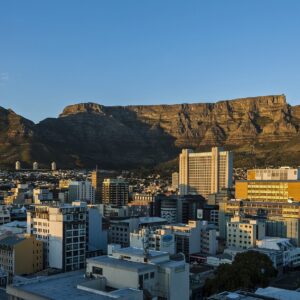
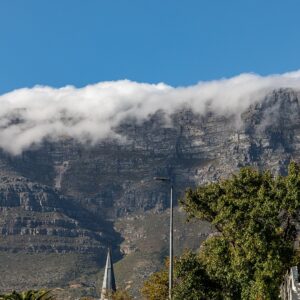
The City Bowl is the amphitheatre of flat land held between Table Mountain, Devil’s Peak, Signal Hill and Table Bay. Almost everything that made Cape Town a city happened inside it, and it remains the only part of the metropolitan area where a visitor can spend several days without a car.
This page is an orientation, not a substitute for the individual guides. If you want the whole city, start with the Cape Town guide; if you want the mountain above it, see Table Mountain.
Where to stay and what to book in the City Bowl
Places to stay between the mountain and the harbour, and the tours that start on the doorstep.
Places to stay
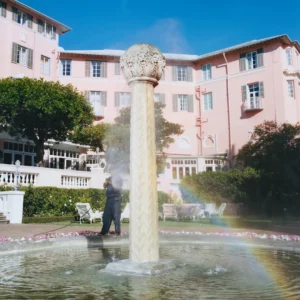
Mount Nelson, A Belmond Hotel, Gardens
A 196-room hotel opened in 1899, set in nine acres of gardens below Table Mountain in Gardens.
View Property DetailsTaj Cape Town, City Centre
A heritage conversion of the old Reserve Bank on Wale Street, at the top of the city centre.
View Property DetailsGorgeous George, City Bowl
A 33-room design hotel in two restored heritage buildings on St George’s Mall, in the middle of the working city.
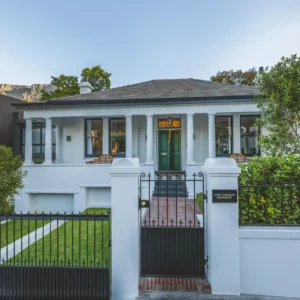
View Property DetailsCape Cadogan Boutique Hotel, Gardens
A restored heritage house on a quiet Gardens street, a few minutes from Kloof Street on foot.
View Property Details


Browse all Cape Town accommodation
Tours and experiences
Cape Town: Table Mountain Cable Car, Hop-On Hop-Off Bus Tour
The open-top bus network combined with a cableway ticket — the standard first-day package.
View Tour DetailsCape Town: Robben Island, Table Mountain & Bo-Kaap Tour
The city’s three headline stops in one day — island, mountain and the Bo-Kaap.
View Tour DetailsCape Town: 3-Hour Table Mountain Hike via Platteklip Gorge
The direct route up the front face — steep, relentless, and the most straightforward way to walk up Table Mountain.
View Tour DetailsCape Town: Lion’s Head or Table Mountain Guided Hike
The spiral climb up Lion’s Head — shorter than Table Mountain, and the best view back at it.
View Tour Details
In this City Bowl guide
What the City Bowl actually covers
In everyday use the City Bowl means the central business district plus the residential slopes that ring it: Gardens, Oranjezicht, Tamboerskloof, Vredehoek, Higgovale and Bo-Kaap. The whole basin is roughly two kilometres across. From the Company’s Garden you can walk to the Castle in twenty minutes and to the Bo-Kaap in ten, uphill.
The grid is Dutch and the street names are a history lesson in themselves. Orientation is easy once you accept the local convention: the mountain is south, the sea is north, and everything is described as being above or below Buitengracht.
The Company’s Garden and the museum quarter
The Company’s Garden began in 1652 as a vegetable garden supplying passing Dutch East India Company ships, which is the whole reason a settlement exists here at all. What survives is a long tree-lined walk flanked by the institutions that grew up around it — the South African National Gallery, the Iziko South African Museum and Planetarium, the National Library, St George’s Cathedral and the Houses of Parliament.
For a first day this is the most efficient square kilometre in the city: several major collections, a shaded walk, and enough context to make the rest of Cape Town legible. Check opening days directly with the museums, which vary and change.
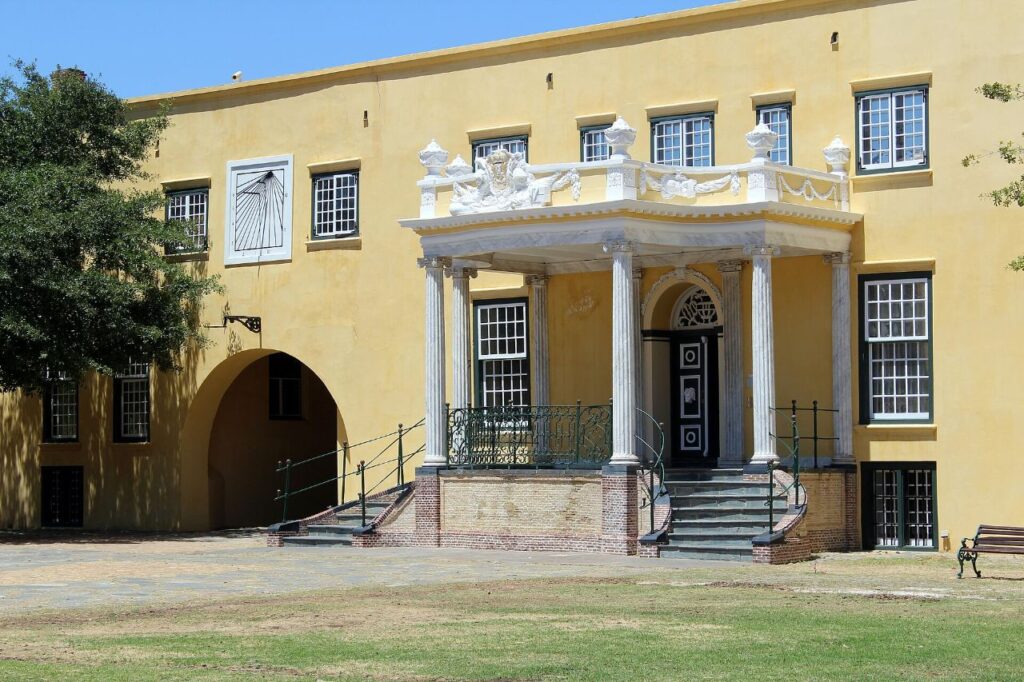
The Castle of Good Hope
The Castle is the oldest surviving colonial building in South Africa, a five-pointed stone fort built by the Dutch East India Company between 1666 and 1679. It sat on the shoreline when it was built; land reclamation has since put it several blocks inland, which tells you how much of the modern foreshore is artificial.
It houses military and art collections and a ceremonial programme. It is also, unavoidably, a monument to the beginning of colonial rule at the Cape, and the site interprets that history rather than skirting it.
Long Street, Bree Street and the centre
Long Street is the Victorian spine of the centre, recognisable by its cast-iron balconies, and it has been the city’s late-night street for decades. Bree Street, one block over, is where much of Cape Town’s contemporary restaurant scene has settled. Greenmarket Square and the surrounding lanes hold the long-running craft market.
Practically: this area is lively and worth walking by day, busier and more mixed at night. Ordinary city-centre awareness applies — keep phones out of sight, use a metered or app-based ride after dark rather than walking between districts, and read the safety section of the Cape Town guide.
Bo-Kaap
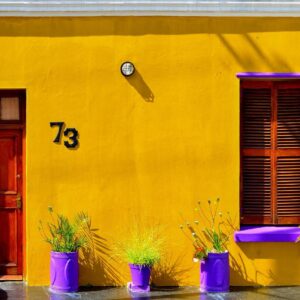
The Bo-Kaap rises on the slope of Signal Hill immediately above the centre. Its brightly painted houses and cobbled streets are among the most photographed things in South Africa, and it is important to understand what you are looking at: this is a residential neighbourhood with deep Cape Malay roots, the oldest mosque in the country, and an active, ongoing fight against displacement.
- It is a place where people live. Walk it quietly, and treat the streets as streets rather than a set.
- Do not photograph residents, doorways or interiors without asking. Residents have raised this repeatedly and publicly.
- Spend money locally — the museum, the cafés, the spice shops and the cooking classes run by families from the area.
- A walk led by someone who lives there is worth far more than a drive past, and is the form of visit the community itself asks for.
District Six
East of the centre is a stretch of largely empty ground on the slope below Devil’s Peak. This was District Six, a dense mixed community of some 60,000 people declared a whites-only area in 1966 and demolished over the following years, its residents forcibly removed to the Cape Flats. Most of the land was never rebuilt.
The District Six Museum in Buitenkant Street is the place to begin, and it is run substantially by former residents. Visiting the site itself without that context tells you almost nothing. This is not a photo stop.
Getting around the City Bowl
Walking is the point. The basin is small and the grid is easy, though the slopes towards the mountain are steeper than they look on a map. The MyCiTi bus network covers the centre and connects to the V&A Waterfront and the Atlantic Seaboard. Ride-hailing is widely used and generally the sensible way to move at night.
Driving in the centre is manageable but parking is managed and paid, and one-way systems are unforgiving. If you are staying in the City Bowl, you can leave the car parked for whole days — see the self-drive guide for parking and car-guard conventions.
Who the City Bowl suits
- Good for first-time visitors, short trips, anyone without a car, and travellers who want museums, restaurants and history within walking distance.
- Less good for beach holidays, families wanting quiet, and anyone whose days will mostly be spent out on the peninsula or in the Winelands.
- How long — one full day covers the museum quarter and the Castle. Two days lets you add the Bo-Kaap properly and the District Six Museum without rushing either.
Find accommodation in the City Bowl
If you are basing yourself here to walk the centre, this is where to compare what is available. Rates and availability move a long way between seasons, so check your dates before you commit to a base.
See City Bowl stays on Booking.comAffiliate link — we may earn a commission if you book through it, at no additional cost to you.
Nearby
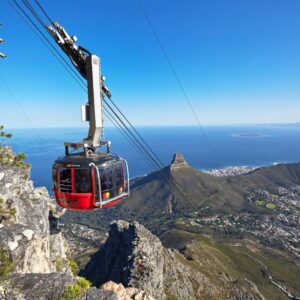
The City Bowl sits between three of the other Cape Town clusters. The V&A Waterfront is a short bus ride down to the harbour. Over Kloof Nek lies the Atlantic Seaboard. Behind and above is Table Mountain, whose lower cableway station is a ten-minute drive from Gardens. Further out are the Southern Suburbs and Constantia and the False Bay coast.
Plan the rest of your trip
- Cape Town without a car — why the City Bowl is the strongest car-free base.
- Where to stay in Cape Town — how the City Bowl compares with the other bases in the city.
- Itineraries — the three-day Cape Town plan starts in the City Bowl.
- Where to stay — how the City Bowl compares with the Waterfront and the beach suburbs as a base.
- Things to do — heritage, food and hiking across the province.
- Tours and guided experiences — including community-led walks in the Bo-Kaap and District Six.
- Travel planning — seasons, safety and practicalities.
Official sources
- Cape Town Tourism — official city visitor information, opening times and its TravelWise safety section.
- Table Mountain National Park (SANParks) — for Signal Hill, Lion’s Head and the slopes above the City Bowl.
Where to stay, and what to book
Our City Bowl & Gardens accommodation page carries a short orientation to the area and a live availability map. For experiences, see Cape Town City & Food Experiences.