

Hero image: Discott, CC BY-SA 4.0, via Wikimedia Commons
The Southern Suburbs run down the eastern and southern flank of Table Mountain, from Rondebosch and Newlands through Bishopscourt and Wynberg to Constantia. It is the wettest, greenest and leafiest part of Cape Town, and the part visitors most often skip — usually because nobody explains that the country’s oldest wine estates are twenty minutes from the city centre.
The Southern Suburbs are a car-and-garden cluster rather than a walking one. If you have one spare day in Cape Town and have already done the mountain and the peninsula, this is where it should go.
Where to stay in the Southern Suburbs
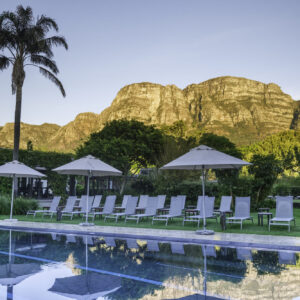
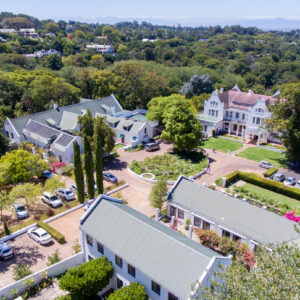
Places to stay around Newlands and the Constantia valley, on the quieter side of the mountain.
Places to stay
Vineyard Hotel, Newlands
A garden hotel on the Liesbeek river in Newlands, at the foot of the eastern slopes of Table Mountain.
View Property DetailsSouthern Sun Newlands, Southern Suburbs
A large, practical hotel on Main Road in Newlands, with free parking and a heated pool, minutes from Kirstenbosch.
View Property DetailsSteenberg Hotel & Spa, Constantia Valley
A five-star hotel on a historic working wine estate in the Constantia valley, with golf, a spa and two restaurants…
View Property DetailsThe Cellars-Hohenort, Constantia
A 51-room hotel in nine acres of gardens in the Constantia valley, fifteen minutes from the city centre.
View Property Details


In this Southern Suburbs guide
Kirstenbosch
Kirstenbosch National Botanical Garden occupies the eastern foot of Table Mountain and is devoted almost entirely to indigenous southern African plants. It is the flagship of the South African National Biodiversity Institute and part of the Cape Floral Region Protected Areas UNESCO World Heritage Site.
Beyond the planted areas the garden runs straight into the mountain: Skeleton Gorge and the Nursery Ravine paths start here, which makes Kirstenbosch one of the main walking entrances to Table Mountain. The tree canopy walkway and the summer concert season are the two things most people come for. Check opening hours, concert dates and entry arrangements with the garden directly.
Newlands
Newlands sits in the wettest suburb in Cape Town, which is why it is so densely wooded. It is best known for its cricket and rugby grounds, a long-standing brewery, and the forest paths on the mountain slope above it. The Newlands forest walks are popular, easy and, like all Cape Town mountain paths, better done in company rather than alone.

Constantia and its wine estates
The Constantia valley is where South African wine began. Vines were planted here in the 1680s, long before the Cape Winelands proper were developed, and the estates that remain are the oldest in the country. Groot Constantia is the original farm and the most visited, with a Cape Dutch manor house, cellars and a museum alongside the tasting rooms.
What makes Constantia unusual is proximity. These are working wine estates inside the city boundary, cooled by sea air from False Bay, and reachable in half an hour from the centre. For a traveller who cannot spare a full day for Stellenbosch or Franschhoek, Constantia is the honest substitute rather than a consolation prize.
It is also a genuinely different wine region from the Winelands — cooler, more maritime, historically associated with sweet wine. If you are going to Stellenbosch anyway, treat Constantia as a different thing rather than a preview. See Stellenbosch for the comparison.
Heritage and the university
The University of Cape Town’s upper campus stands on the slope above Rondebosch, its ivy-covered stone terraces visible from the M3. Around it are Rhodes Memorial, with a view east across the Cape Flats, and a scatter of Cape Dutch and Victorian houses. Groote Schuur Hospital, where the first human heart transplant was performed in 1967, is on the same slope and has a museum devoted to it.
Getting there and around
The M3 is the spine of the Southern Suburbs and connects the City Bowl to Muizenberg and the False Bay coast in about half an hour outside peak times. The Southern Line railway serves Rondebosch, Newlands and Wynberg, though service levels have varied and should be checked before you rely on them.
Realistically this cluster wants a car, or a driver if you intend to taste wine. Our self-drive guide covers the drink-driving rules, which are strict.
Best time to visit the Southern Suburbs
This is the wettest corner of Cape Town, and that changes the calendar. The Southern Suburbs are at their greenest from roughly June to October, when the winter rain has come through and the forest paths and gardens are at their best — exactly the months when the Atlantic beaches are least appealing. Kirstenbosch is worth visiting in any season, but the spring display through August, September and October is the one people travel for.
Midsummer is hot, dry and brown by comparison, though it brings the Kirstenbosch concert season and long evenings in the Constantia tasting rooms. The practical point is that a wet or windy day, which spoils a peninsula or Atlantic plan, is a perfectly good day here.
Doing it in a day, without wasting the day
The Southern Suburbs reward a simple order. Start at Kirstenbosch early, when the garden is quiet and the mountain is usually clearest. Give it two to three hours, more if you intend to walk any distance up the slope. Move to Constantia for lunch and one or two estates in the afternoon — two tastings is plenty, and three is optimistic if you also want to look at the manor house and cellars at Groot Constantia.
If you would rather walk than taste, swap the afternoon for the Newlands forest paths or the climb to Rhodes Memorial, and finish with the view east over the Cape Flats. Either version fills a day comfortably without a single long drive.
One planning note that catches people out: the Southern Suburbs sit on the commuter route between the city and the False Bay coast, and the M3 backs up badly in both peaks. Aim to arrive before the morning peak clears rather than driving out at 08:00.
Who this area suits
- Good for gardens and plants, wine without a long drive, forest walking, families, and travellers who want a quiet green base with a car.
- Less good for anyone without transport, and for short trips where the mountain, the city and the peninsula come first.
- How long — half a day for Kirstenbosch alone. A full day comfortably covers Kirstenbosch in the morning and Constantia in the afternoon.
Destination guides in the Southern Suburbs
- Constantia — the wine valley inside the city, its eight estates and the Kirstenbosch pairing.
Nearby
Directly above is Table Mountain, reachable on foot from Kirstenbosch by Skeleton Gorge. North along the M3 is the City Bowl; south is False Bay and the southern peninsula. Over the mountain to the west lies the Atlantic Seaboard. East, past the airport, the N2 runs towards the Cape Winelands.
Plan the rest of your trip
- Itineraries — where a Kirstenbosch and Constantia day fits.
- Where to stay — Constantia as a quiet, green alternative base.
- Things to do — wine, hiking and gardens across the province.
- Tours and guided experiences — wine tours and guided walks.
- Travel planning — seasons, costs and getting around.
Official sources
- Kirstenbosch (SANBI) — official opening hours, entry and concert information.
- Table Mountain National Park (SANParks) — Skeleton Gorge, Newlands forest and current park notices.
- Cape Town Tourism — official visitor information for the Southern Suburbs.
Where to stay, and what to book
Our Southern Suburbs & Constantia accommodation page carries a short orientation to the area and a live availability map.