
The single decision that shapes a Cape Town trip more than any other is not which hotel you book — it is where to stay in Cape Town in the first place. The city is spread along a mountain chain between two coastlines, and the distances are larger than the map suggests. A base that is right for a first-time visitor doing museums and the mountain is wrong for someone whose whole trip is penguins and Cape Point, and both are wrong for someone who wants to walk to dinner without driving.
Deciding where to stay in Cape Town is about choosing an area first, not a property. It covers the seven bases most visitors actually consider, what each one is genuinely good and bad at, and a decision table at the end that matches the areas to what you care about. There is no single best neighbourhood in Cape Town, and anyone who tells you otherwise is selling something.

In this guide
How Cape Town is laid out, and why it matters
Cape Town wraps around Table Mountain, and the mountain is why nothing is as close as it looks. The City Bowl sits in the natural amphitheatre on the northern side, with the harbour and the V&A Waterfront at its foot. Running west and then south from there is the Atlantic Seaboard — Green Point, Sea Point, Bantry Bay, Clifton, Camps Bay — a narrow shelf between the mountains and cold open ocean. On the other side of the mountain lie the leafy Southern Suburbs and Constantia. Further south the peninsula narrows towards Hout Bay on the Atlantic side and Simon’s Town on the warmer False Bay side, ending at Cape Point.
Two practical consequences. First, crossing the mountain takes real time: Simon’s Town to the City Bowl is roughly 40 minutes without traffic and considerably more with it. Second, the two coasts have different weather on the same day. In summer the south-easter hammers the Atlantic side while False Bay is calmer; in winter the pattern often reverses. Where you sleep decides which version of Cape Town you get.
For the full geography, the Cape Town guide sets out how the clusters fit together.
Live accommodation in Cape Town
With an area chosen, this is the practical step: see what is available on your dates and what it costs. The map is centred on the City Bowl, so drag it towards Sea Point, Camps Bay, Constantia or Simon’s Town to compare the areas described above.
Affiliate disclosure: the map below is supplied by Stay22 and shows live availability and prices from independent booking sites. Cape Town Travel Guide may earn a commission on a qualifying booking, at no extra cost to you. We do not set these prices, do not take payment, and are not the merchant of record.
City Bowl
The City Bowl is the historic centre — the Company’s Garden and the museum quarter, the Castle, Long Street and Bree Street, the Bo-Kaap and District Six. It is the one part of Cape Town where you can spend several days without a car.
It works if you are here for the first time, your trip is short, you want restaurants and bars within walking distance, you are interested in the city’s history rather than only its scenery, or you are travelling without a car and intend to use day tours.
It works less well if you came for a beach holiday, you are travelling with small children who need quiet, or most of your days will be spent out on the peninsula or in the Winelands — in which case you will be driving out of the centre every morning against the traffic.
Honest limitations: parts of the centre are much quieter after dark and after office hours, street parking is metered and awkward, and it can be noisy on weekends near the Long Street end. This is a working city centre, not a resort, and ordinary city awareness applies at night.
V&A Waterfront
The V&A Waterfront is a working harbour that has been redeveloped into a large mixed retail, hotel and attraction precinct. It is the departure point for Robben Island, it has the Two Oceans Aquarium and the Zeitz MOCAA, and it is walkable, well lit and heavily managed.
It works if it is your first visit and you want everything in one place, you are travelling with children, you have limited mobility, you are arriving late or leaving early, or you simply want the lowest-friction option available.
It works less well if you want to feel like you are in a South African city rather than a well-run precinct, if you are on a budget — it is consistently the most expensive base in Cape Town — or if you want restaurants that locals rather than visitors fill.
On safety language
The Waterfront is privately managed, well lit and heavily patrolled, and many visitors find it a comfortable base for those reasons. That is not the same as calling it “the safest place in Cape Town”, which is a claim no one can responsibly make about any neighbourhood. Sensible precautions apply everywhere in the city, and personal circumstances differ. Check current advice from the City of Cape Town and your own government’s travel guidance rather than relying on a blanket statement.
Sea Point and Green Point
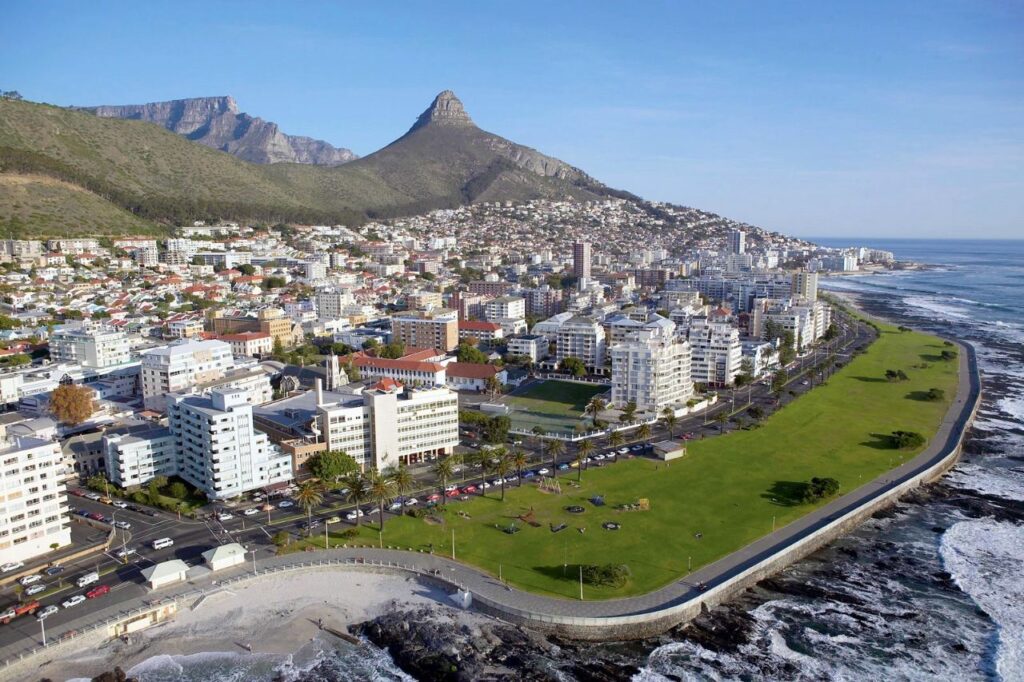
Sea Point and Green Point sit on the Atlantic Seaboard between Signal Hill and the sea, ten minutes from both the City Bowl and the Waterfront. This is where a very large share of Cape Town’s mid-range accommodation actually is, and it is arguably the best-value base in the city for the combination of location, transport and food.
The defining feature is the promenade — a wide paved seafront path running several kilometres from Green Point to Bantry Bay, busy from dawn with runners, walkers, dogs and families. It is free, it is flat, it is genuinely used by residents, and it is the most pleasant piece of public space in the city.
Sea Point’s Main Road carries a dense, unglamorous and very good strip of restaurants, delis, bakeries and small shops. Green Point sits closer to the Waterfront and the stadium, with the Green Point Urban Park and the Mouille Point lighthouse on the shore.
It works if you want to walk to dinner, you want the coast without Camps Bay prices, you are staying a week or more, you run or walk in the mornings, or you want reasonable public transport.
It works less well if you specifically want a swimming beach at your door — the shoreline here is rock and tidal pool rather than sand — or if you want the quiet of the Southern Suburbs.
Camps Bay and Clifton
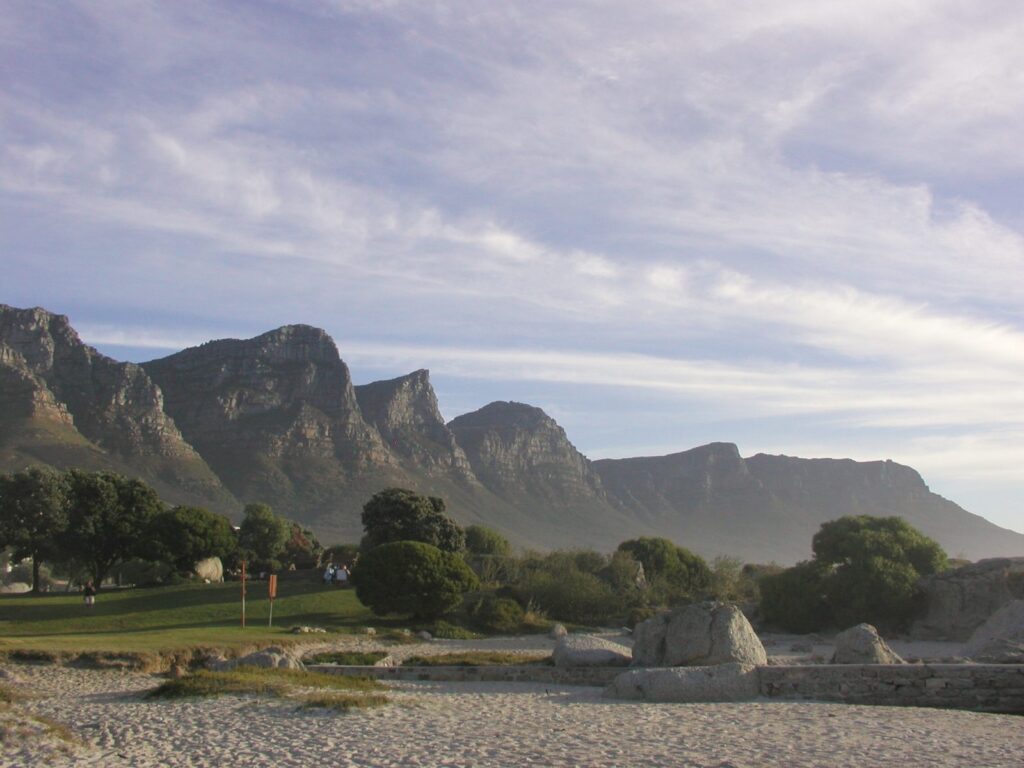
Camps Bay is the postcard: a white beach directly below the Twelve Apostles ridge, with a strip of restaurants and bars facing it across the road. Clifton, just north, is four small sheltered coves reached down long flights of steps, with no commercial strip at all.
It works if the setting is the point of the trip, you want to walk out of your accommodation onto sand, you are here in shoulder season, or you have a car and do not mind using it.
Be clear about the trade-offs. The water is Atlantic and cold — this is the Benguela current, and no amount of sunshine changes it. Summer afternoons bring the south-easter, which can make the beachfront genuinely unpleasant while False Bay is calm. Parking on Victoria Road in peak season is difficult and the strip is loud until late on summer nights, so ask about the aspect of your room. And you are twenty minutes from the City Bowl over Kloof Nek with no easy walking route between them.
Clifton adds a further consideration: the coves are down steep steps from the road, which is charming with a towel and much less so with luggage, small children or limited mobility.
Constantia
Constantia is a wine valley inside the city limits — oaks, historic estates, big gardens and quiet roads on the eastern slopes of the mountain, with Kirstenbosch a few minutes away in the Southern Suburbs.
It works if you want quiet and space, you are travelling as a family or a group, you like wine and gardens, you are staying longer, or you want a calmer base for a peninsula-focused trip — it is well placed for both the Winelands and the southern peninsula.
It works less well if you do not have a car. Constantia is genuinely car-dependent: there is no walkable restaurant strip and public transport is limited. It is also not a beach base — the coast is fifteen to twenty-five minutes away in either direction.
Hout Bay
Hout Bay is a valley and working fishing harbour on the Atlantic side, ringed by mountains, about twenty-five minutes from the City Bowl over Constantia Nek or along the coast.
It works if you want a village feel with a real harbour rather than a precinct, you are exploring the peninsula, you like walking and the outdoors, or you want more space for your money than the Atlantic Seaboard offers.
The road question matters here. The scenic route south from Hout Bay is Chapman’s Peak Drive, which closes for rockfall, storm damage and maintenance — sometimes for extended periods. It was closed on the official status page when we checked on 20 August 2026. The alternative is inland over Constantia Nek and down Ou Kaapse Weg, which adds a good half hour. If a Hout Bay base depends on Chapman’s Peak being open, check before you book.
Simon’s Town and the southern peninsula
Simon’s Town is a naval town on the False Bay coast, next to the Boulders penguin colony and about twenty minutes from Cape Point. The wider southern peninsula includes Muizenberg and Kalk Bay on the way down.
It works if your trip is genuinely peninsula-focused — penguins, Cape Point, tidal pools, coastal walks — if you want warmer swimming water than the Atlantic side, or if you are staying long enough to justify a second base.
It works less well as a first-visit base. You are 40 minutes from the City Bowl in good traffic and rather more in bad, and doing the museums, Table Mountain and the Winelands from here means a lot of driving. A common and sensible pattern for a week is a few nights in town and a few nights down the peninsula rather than trying to do both from one base.
Do you need a car?
This is usually the second question and it changes the answer to the first. Cape Town is not a city where you can rely on public transport to reach everything, but it is not true that you need a car in every scenario either.
The MyCiTi bus network covers the corridor most visitors actually use. Routes 101, 111 and 104 link the City Bowl and Gardens with the Civic Centre and the Waterfront; route 105 runs Sea Point to the Civic Centre; routes 106 and 107 connect Camps Bay with the Civic Centre; and routes 108 and 109 run between Hout Bay and Sea Point. That is enough to base yourself in the City Bowl, Sea Point, Green Point, Camps Bay or the Waterfront and get around without driving.
What it does not cover well is Constantia, the Winelands and the southern peninsula. For those you need a car, a tour, or e-hailing.
MyCiTi airport service — checked 20 August 2026
The MyCiTi A01 airport service between the airport and the Civic Centre is temporarily suspended, according to the operator’s own airport services page, with no resumption date published. Plan airport transfers on the assumption that it is not running, and check the MyCiTi site before you travel.
If you are not driving, the practical shortlist narrows to the City Bowl, the Waterfront, Sea Point and Green Point — and of those, Sea Point and the City Bowl give you the most that is genuinely walkable. If you are driving anyway, every option opens up and Constantia and Hout Bay become much more attractive.
Where to stay in Cape Town: which area suits you
There is no universally best base, and no single right answer to where to stay in Cape Town. There is a best base for a particular set of priorities, and this is the shortest way to get to it.
| If your priority is… | Consider… | Why |
|---|---|---|
| A first visit, short trip | City Bowl or V&A Waterfront | Most sights within reach without long drives; easiest to orient yourself |
| Restaurants and going out | City Bowl or Sea Point | The densest walkable eating in the city; Bree Street and Sea Point Main Road |
| Beaches at the door | Camps Bay or Clifton | Sand directly below the accommodation — accepting cold water and summer wind |
| Travelling with children | V&A Waterfront or Constantia | Contained and low-friction, or space and quiet with a garden |
| No car | City Bowl, Sea Point or V&A Waterfront | Walkable, and covered by the MyCiTi routes listed above |
| Wine and gardens | Constantia | Estates and Kirstenbosch within minutes; also well placed for the Winelands |
| Quiet | Constantia or Hout Bay | Residential and low-density, at the cost of needing to drive |
| Exploring the peninsula | Simon’s Town or Hout Bay | Cuts the daily drive to Cape Point, Boulders and the coastal roads |
| A longer stay of a week or more | Sea Point, or two bases | Best value and self-catering supply — or split the trip between town and the peninsula |
Our editorial view, for what it is worth on a first visit of under a week: the City Bowl if you care most about the city itself, Sea Point if you want the best balance of price, walkability and coast, and the Waterfront if you are prioritising convenience over character. That is a recommendation, not a ranking — all three work.
Featured places to stay
Nine Cape Town properties we have written up individually, chosen to sit in different parts of the city and suit different kinds of trip rather than to cover the market. Each links to our own guide to that property — what it is like, who it suits and what the trade-offs are — and the booking step happens from there, not from this page. Below them, the live map searches the whole market rather than our shortlist.
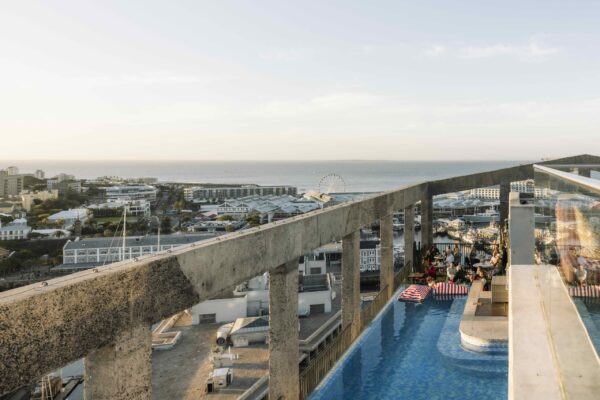

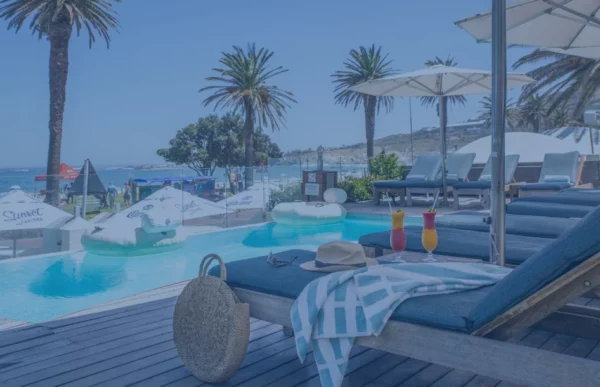
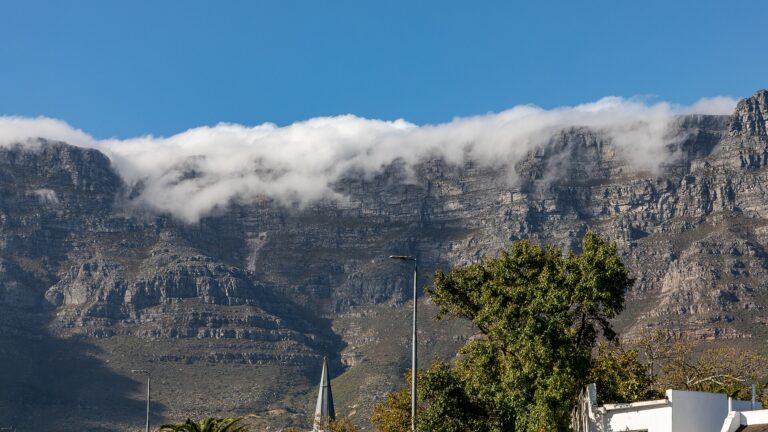
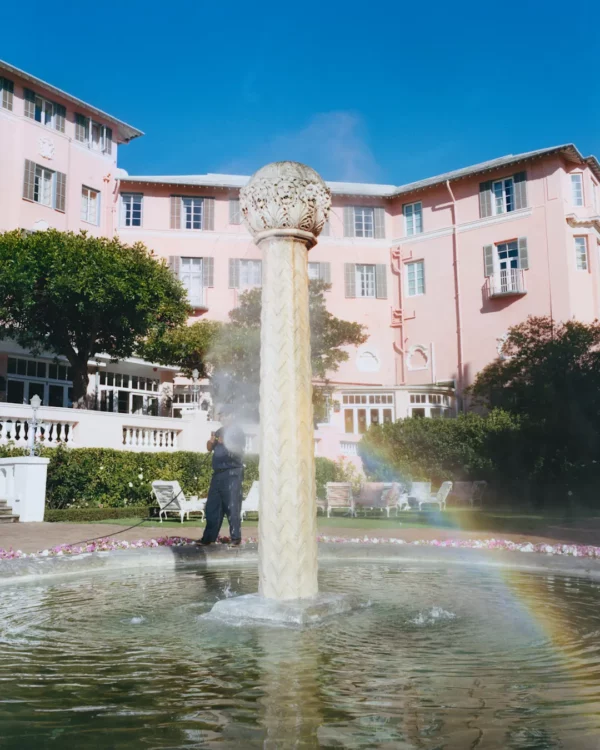



Photographs on these cards show the surrounding area, not the interiors of the properties themselves.
What to do next
Decide the area first, then the property — that is the whole trick to working out where to stay in Cape Town. If you are still weighing how long to spend in Cape Town at all, that decision comes before this one — see how many days you need in Cape Town. If you already know your dates, work out whether you are driving, because that narrows the shortlist faster than anything else.
Once you have picked an area
Search by neighbourhood rather than by city — filter to the area you settled on above, then compare what is actually available on your dates. Cape Town accommodation moves a long way between seasons, and December and January book out early.
See Cape Town stays on Booking.comAffiliate link — we may earn a commission if you book through it, at no additional cost to you.
Then read the guide for the area you chose. Each one covers what the neighbourhood is actually like to stay in, how to get around from it, and what is within walking distance:
- Cape Town without a car — how the transport picture changes which of these areas suits you.
- City Bowl & Historic Centre
- V&A Waterfront
- Atlantic Seaboard — Sea Point, Green Point, Bantry Bay and Clifton
- Camps Bay
- Constantia and the Southern Suburbs
- Hout Bay
- Simon’s Town and Muizenberg & Kalk Bay
- Cape Town beaches — how the two coasts differ, which is worth being near.
For the wider province, the Western Cape accommodation guide covers how the six regions differ and where to base yourself outside the city. Travel planning covers timing, getting around and the practical questions.
Sources
- MyCiTi — route and stop timetables, and the current airport service status.
- City of Cape Town — public transport, beaches and city services.
- Chapman’s Peak Drive — the official status page for the Hout Bay road.
Transport details were checked on 20 August 2026. Bus routes and road status change — confirm before you travel.
Browse Cape Town accommodation by area
City Bowl & Gardens · V&A Waterfront & Green Point · Atlantic Seaboard · Camps Bay & Oudekraal · Hout Bay · Southern Suburbs & Constantia · False Bay & Southern Peninsula
Each area page carries a short orientation and a live availability map. See also when to book accommodation in the Western Cape.