
Hero image: Hilton1949, CC BY-SA 3.0, via Wikimedia Commons
Western Cape accommodation is a geography problem before it is a budget problem. Western Cape accommodation spans six regions, the drives between them are longer than a map suggests, and the single decision that shapes a trip most is not which guesthouse you book but which town you sleep in and for how many nights. This page sets out the areas that actually work as bases, what each is good for, and who each suits, so that choosing Western Cape accommodation follows the route rather than fighting it.
We are an editorial guide, not a booking engine. Nothing here is a paid placement. When we do list properties, they will be marked, and our affiliate disclosure explains how that works.
In this Western Cape accommodation guide
How to choose a base
Three rules cover most Western Cape accommodation decisions, whatever your budget.
- Fewer bases, longer stays. Two or three nights per base is the minimum that stops a trip feeling like a series of check-ins. Nearly everyone who regrets their plan moved too often.
- Match the base to the day, not the view. A room on the Atlantic Seaboard is beautiful and a poor choice if your days are in the Winelands. Sleep near where you intend to spend your time.
- Book the scarce places first. In December, January and over Easter the good rooms in Cape Town, Franschhoek, Hermanus and Plettenberg Bay go months ahead. Everything else can wait.

Live accommodation around Cape Town and the Peninsula
Once you have decided which region to base yourself in, the map below shows what is actually available and what it currently costs. It is centred on Cape Town and the Peninsula, because that is where most Western Cape trips start; each regional guide linked above carries a map for its own area.
Affiliate disclosure: the map below is supplied by Stay22 and shows live availability and prices from independent booking sites. Cape Town Travel Guide may earn a commission on a qualifying booking, at no extra cost to you. We do not set these prices, do not take payment, and are not the merchant of record.
Cape Town
Cape Town is where most trips start, and its areas behave very differently. See the full Cape Town guide for how the city fits together.
- City Bowl — central, walkable to the museums, restaurants and the Table Mountain lower station. Best if you want to be able to walk somewhere at night. Noisier around Long and Bree.
- V&A Waterfront — secure, self-contained, easy with luggage and children, and the departure point for the Robben Island ferry. The trade-off is price and a certain distance from ordinary city life.
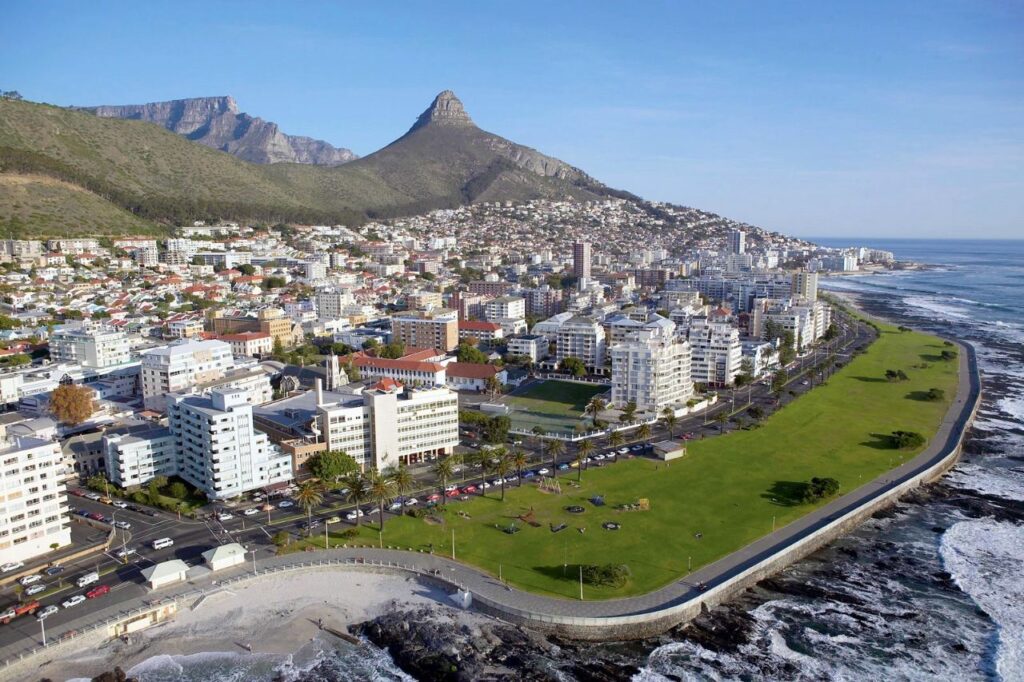
- Sea Point and Green Point — the practical middle. Dense, walkable, well served by restaurants and the promenade, generally better value than the beach suburbs.
- Camps Bay and Clifton — the Atlantic beach strip. Spectacular and expensive, and a real drive from the city centre in summer traffic.
- Constantia — leafy, quiet, wine estates on the doorstep. Suits travellers with a car who want space rather than nightlife.
- Hout Bay — a working harbour village with mountains on three sides. A good compromise base for peninsula days.
- Simon’s Town and the southern peninsula — warm-water False Bay swimming, the penguin colony nearby, and a slower pace. Furthest from the city centre.
Cape Winelands
The Cape Winelands work either as day trips from Cape Town or as a base of their own. Staying over is the better choice if wine is a main reason for the trip, because it removes the drive home.
- Stellenbosch — the most practical Winelands base. A walkable historic core, a university town’s range of places to eat, and the densest concentration of estates.
- Franschhoek — smaller, more single-street, heavily oriented to restaurants and tasting rooms. Books out furthest ahead.
- Paarl — larger and less polished than either, generally better value, and well placed for the R45 and the passes.

Cape Overberg and the Whale Coast
The Cape Overberg is the natural second region for anyone heading east, and the only one where the season changes the accommodation market sharply.
- Hermanus — the whale-season centre. Rooms with a sea view sell out in the southern winter and spring in a way they do not in midsummer.
- Gansbaai — quieter, cheaper, and the base for the shark and marine tour operators.
- Cape Agulhas and Struisbaai — small, low-key, and the point of the trip is that you are at the southern tip of Africa.
- Swellendam — an inland heritage town on the N2, useful as a one-night stop between Cape Town and the Garden Route.
Cape West Coast
The Cape West Coast is the closest region to Cape Town and the easiest short break. Accommodation is smaller-scale and more seasonal than anywhere else in the province.
- Langebaan — the lagoon, watersports and the entrance to West Coast National Park. Busy in the August and September flower season.
- Paternoster — whitewashed fishing-village cottages and a strong food scene for its size. Small, so it fills quickly.

Garden Route and Klein Karoo
The Garden Route has the widest range of accommodation in the province, and the most reason to move between bases rather than stay put.
- Mossel Bay — the western end and a common first night out of Cape Town.
- Wilderness — lakes, forest and a long beach; quiet, and good for a slower few days.
- Knysna — the lagoon town and the usual mid-route base, with the widest choice of places to eat.
- Plettenberg Bay — the beach resort of the route and the most expensive part of it in December and January.
- Oudtshoorn — inland in the Klein Karoo, hot and dry, and the base for the caves and ostrich country.
Cape Karoo
The Cape Karoo has the fewest rooms and some of the most characterful. It is usually a one or two-night stop rather than a destination in itself — which is exactly why it is worth stopping properly.
- Prince Albert — a small Karoo village below the Swartberg Pass, and the most rewarding overnight in the region.
- Beaufort West — the N1 town, practical rather than charming, and the gateway to Karoo National Park.
Ready to look at actual properties?
This page is about choosing the right area first. Once you know roughly where you want to be, Booking.com lists most of what is available across the Western Cape and lets you filter by town, dates and property type.
Browse Western Cape accommodation on Booking.comAffiliate link. We may earn a commission if you book through it, at no additional cost to you. See our affiliate disclosure.
Types of accommodation you will meet
- Where to stay in Cape Town — choosing between the City Bowl, the Waterfront, Sea Point, Camps Bay, Constantia, Hout Bay and the peninsula.
- Where to stay on the Garden Route — choosing between Mossel Bay, George, Wilderness, Knysna, Plettenberg Bay and Oudtshoorn.
- Guest houses and B&Bs — the backbone of Western Cape accommodation, often owner-run and often the best value.
- Self-catering cottages and apartments — standard on the coast and in the Winelands, and much cheaper per head for families.
- Wine estate and farm stays — increasingly common in the Winelands, Overberg and Klein Karoo.
- Hotels — concentrated in Cape Town, the Waterfront and the larger Garden Route towns.
- National park rest camps — SANParks and CapeNature run their own accommodation inside several reserves, booked directly with them rather than through travel sites.
Practical notes
Western Cape accommodation rates swing hard by season rather than by day of week. Mid-December to mid-January is the peak everywhere on the coast; the shoulder months either side are markedly cheaper for the same room. Winter is cheap on the coast and cold inland.
Most guesthouses quote per room, most self-catering per unit, and many places apply a minimum stay over public holidays. Parking is worth checking in central Cape Town, where it is often not included. If you are arriving late, confirm check-in arrangements in advance — smaller owner-run places are not staffed around the clock.
Where to go next
Work out the route before the rooms. Our itineraries set out realistic trip shapes from three to fourteen days, the self-drive guide covers the driving those routes involve, and travel planning deals with seasons, costs and practicalities. Once the shape is fixed, choosing Western Cape accommodation becomes straightforward.
Read next
- Where to stay in the Cape Winelands — three very different wine towns within half an hour of each other.
- Where to stay on the Cape Whale Coast — four very different bases on one short stretch of coast.
Official sources
For park and reserve accommodation, book with the conservation authorities directly rather than through a third party:
- SANParks — rest camps and cottages in the national parks.
- CapeNature — cottages and camping in the provincial reserves.
- Cape Town Tourism — official visitor information for the city.
Browse accommodation by region
Cape Town Accommodation · Cape Winelands Accommodation · Whale Coast Accommodation · Garden Route Accommodation · Cape West Coast Accommodation
Every region and town archive carries a short orientation and a live availability map. See also when to book accommodation in the Western Cape and where to stay on the Cape West Coast.