
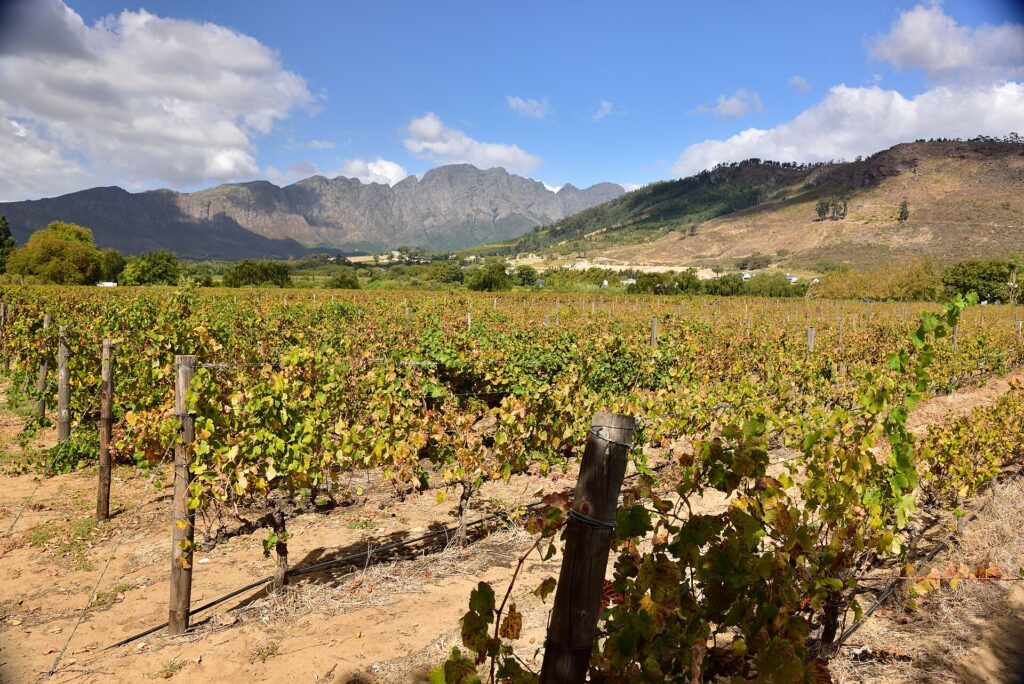
Most visitors to Cape Town have room for one wine day, not three. The question is therefore not which estates are best — it is which wine area you should point the car at. A Cape Winelands day trip to Stellenbosch is a different day from Franschhoek, and both are a different proposition from Constantia, which is not really a Winelands trip at all.
This guide compares the three realistic choices, adds Paarl as the fourth option most people overlook, and deals with the part that decides everything else: who is driving.
In this guide
The short answer
If this is your first time and you want the full Winelands experience — a historic town, a serious wine region and a proper day out — go to Stellenbosch. If you want a smaller, prettier, food-led day and would rather not drive between estates, go to Franschhoek. If you have half a day, no car, or no appetite for an hour on the N2 each way, go to Constantia, which is inside Cape Town.
None of those is universally right. The rest of this page is the reasoning, so you can disagree with it for good reasons.
Stellenbosch
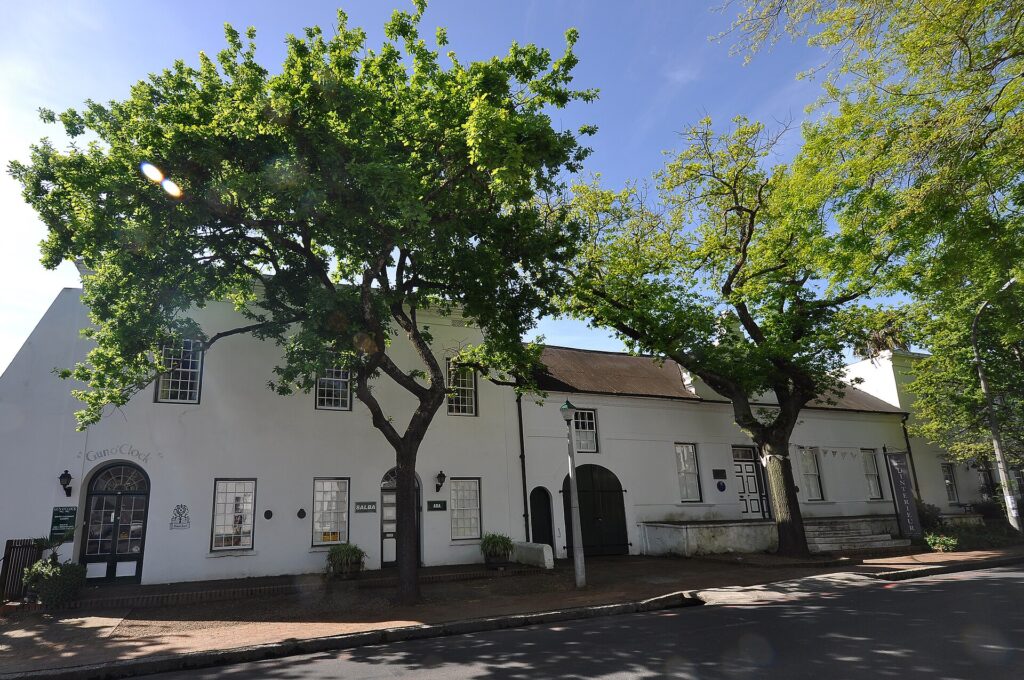
Stellenbosch is about 50 km east of Cape Town, and Wesgro puts the drive at around 45 minutes. It is the most practical base in the Cape Winelands, and the reason is that it does three things at once that rarely coexist.
- A historic town you can walk. Simon van der Stel named the place in 1679 and it was laid out in 1685, making it the oldest town in South Africa after Cape Town. Dorp Street holds one of the longest surviving rows of period buildings in the country, under oaks.
- The widest choice of estates. The Stellenbosch Wine Route is South Africa’s oldest, and the sheer number of producers means you can build almost any kind of day — grand historic estates, small modern cellars, or a mix.
- A working university town. That keeps it from becoming a museum piece, and it is why the eating and drinking is not only aimed at visitors.
Why it works for a first Winelands visit
Because you get the town and the wine. You can spend the morning on foot among Cape Dutch architecture, have lunch in town rather than at an estate, and visit two estates in the afternoon. If your trip has one wine day in it and you want that day to feel like a place rather than a tasting circuit, this is the one.
The limitations
The estates are spread across a wide valley system, so you will be driving between them — which makes the designated-driver question unavoidable. Stellenbosch is also busy: in high season the well-known estates and the main street are full, and a day built around famous names will feel like queueing. And it is the option most likely to become a rushed day if you also try to fit in Franschhoek.
Franschhoek
Franschhoek is the smallest and most enclosed of the three main Winelands towns, and the easiest to understand: a flat valley floor under vineyards, a wall of mountains on three sides, and one main street running down the middle. It is about an hour from Cape Town, twenty-five minutes from Stellenbosch over the Helshoogte Pass, and thirty from Paarl.
- Village atmosphere. You can park once and walk the length of the village. It is smaller and more curated than Stellenbosch, which is either the appeal or the objection depending on your temperament.
- Food. This is where a great deal of South African fine dining happens — there are more restaurants per resident here than anywhere else in the country. If the day is really about lunch, Franschhoek is the answer.
- The valley itself. One road in, mountains around it, vineyards across the floor. It photographs better than anywhere else in the Winelands and it is a short valley, so nothing is far.
- A French Huguenot history that is genuinely present in the place names and the monument at the head of the valley, not just marketing.
Why it can work without driving between estates
Franschhoek is the one Winelands town where you can realistically visit several estates without anyone getting behind a wheel between them. The Franschhoek Wine Tram runs a hop-on hop-off service using a combination of a double-decker tram and an open-sided tram-bus, on several lines, each calling at a selection of estates in the valley. You buy a line, get off where you like, and pick up the next vehicle.
Two practical points worth knowing rather than discovering: tasting fees are charged by the estates and are not included in the tram ticket, and booking ahead is strongly recommended, particularly for a specific line and departure. Lines, stops and departure patterns change, so check the operator’s current information rather than any timetable published elsewhere — including this page, which deliberately does not print one.
It is not the only way to do Franschhoek without driving. A guided tour from Cape Town or a hired driver both work, and for a group they can cost less per head than they sound.
The limitations
It is further than Stellenbosch and considerably further than Constantia, and the valley is a dead end — you come back the way you came unless you leave over the Franschhoek Pass, which is a longer route. It is also the most expensive of the options and the least like a real town: outside the main street there is not much to do that is not wine or food. If you want architecture, history and a place with its own life, Stellenbosch does that better.
Constantia

Constantia needs to be understood as a different thing, not a smaller version of the same thing. It is a serious wine region that happens to sit inside the city — fifteen to twenty minutes from the City Bowl, on the wooded eastern slopes below the back of Table Mountain.
- It is genuinely historic. Wine has been made here since 1685, and it is the oldest continuously producing wine area in the southern hemisphere. This is not a consolation prize.
- The wine is different. Cooler and closer to the sea than Stellenbosch an hour away, which produces a different style rather than a lesser one.
- It is practical. You can go for half a day. You can go in the afternoon and still have had a morning in the city. You can get there by e-hail for a fraction of what a full Winelands day costs.
Where Constantia does not substitute
Constantia is a valley of a handful of estates in a leafy suburb. It cannot give you a historic wine town to walk around, the scale of choice of the Stellenbosch Wine Route, a mountain valley to drive into, or the sense of having left the city — because you have not left it. If the Winelands are one of your reasons for coming to the Cape, do not substitute Constantia for them.
Who it is right for
Short trips, half-days, travellers without a car, anyone whose schedule is already full, and anyone who would rather spend the saved three hours of driving on Table Mountain or a beach. It is also the sensible answer on a day when the weather is uncertain, because you have not committed to being an hour from your hotel.
Paarl — the good alternative
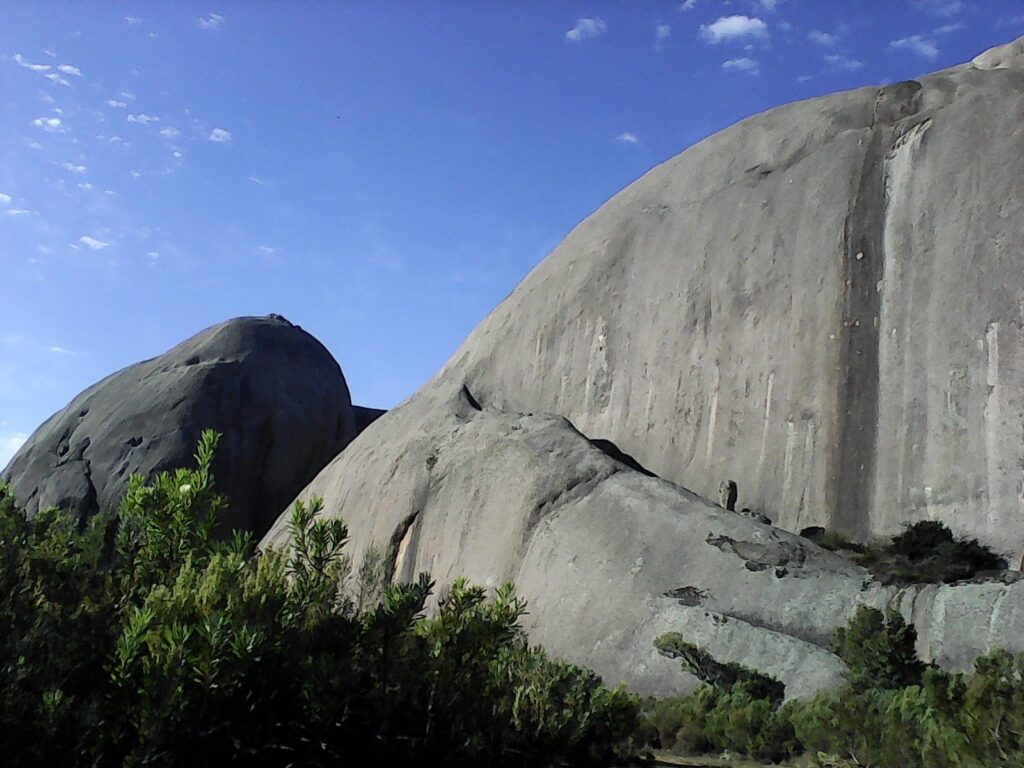
Paarl is the largest of the three main Winelands towns and the one visitors most often skip. It lies on the Berg River about fifty minutes from Cape Town on the N1, half an hour from Franschhoek and thirty-five minutes from Stellenbosch.
It is a working town of about a hundred thousand people that happens to make wine, rather than a wine village that happens to have residents — cheaper, less curated and more ordinary than Franschhoek. Alongside the wine and brandy it has one of the longest heritage streets in South Africa and Paarl Mountain, three enormous granite domes that give the town its name and the best walking of the three towns.
Treat Paarl as an extension or a swap, not a fourth first choice. It works best as an add-on to a Franschhoek day, since they are half an hour apart; as a second Winelands day if you have one; or as the deliberate choice for a traveller who wants heritage and a mountain alongside the wine and does not want a polished village. It is the weakest choice if the wine itself is the whole point of the day, because Stellenbosch simply offers more.
Drinking and driving: decide this first
Do not drink and drive
This is the single decision that shapes a Cape Winelands day trip, and it should be made before you choose a destination — not in a tasting room at four in the afternoon. Someone drives and does not drink, or nobody drives.
South African drink-driving law has been under active amendment through 2026. In January 2026 the Minister of Transport announced the intention to amend section 65 of the National Road Traffic Act to remove the permitted blood-alcohol limit entirely, and the parliamentary transport committee endorsed that direction. Checked on 21 August 2026, we could not find confirmation that the amendment has commenced.
That is precisely why this guide does not print a number. A figure quoted here could be wrong by the time you read it, and a traveller planning around “how much can I have” is planning the wrong thing. Check the current position with Arrive Alive or the Department of Transport, and then plan a day in which the driver has nothing.
The practical options
- Designated driver. Simplest, free, and genuinely fine — most estates will happily pour a taste for someone to smell and spit, and many have decent non-alcoholic options and food. Rotate it across days if you are staying a while.
- A guided tour from Cape Town. Someone else drives, the route is set, and for two people it often costs less than the day would anyway. The trade-off is the itinerary: you go where the tour goes, at its pace.
- A hired driver or private transfer. More flexible than a tour and more expensive; sensible for a group of four or more, where the per-head cost drops sharply.
- E-hailing. Reliable within Cape Town and therefore the natural fit for Constantia. Getting out to Stellenbosch or Franschhoek by e-hail is possible, but getting a car between estates out there, or back to the city late, is much less dependable — do not build a Winelands day on the assumption that one will appear.
- The Franschhoek Wine Tram, which is the one option that removes driving from the middle of the day rather than only from the ends of it.
What this guide will not do is tell you what any particular estate charges, whether it takes walk-ins, or when it closes. Tasting fees, booking rules and hours are set estate by estate and vary widely — some require reservations, some do not, some close early, and many change seasonally. Check the two or three you actually intend to visit, directly, before you go.
Which Cape Winelands day trip suits you
No area here is universally best. This is the shortest honest route to a decision.
| If your priority is… | Consider… | Why |
|---|---|---|
| A first Winelands visit | Stellenbosch | It is the only one that gives you a historic town and a major wine region in the same day, so the day feels like a place rather than an errand. |
| A historic town to walk | Stellenbosch | Dorp Street and the oak-shaded core; the oldest town in South Africa after Cape Town. |
| Food above all | Franschhoek | More restaurants per resident than anywhere else in the country, in a valley you can walk. |
| Easiest from Cape Town | Constantia | Fifteen to twenty minutes from the City Bowl, and reachable without a hire car. |
| A full-day wine experience | Stellenbosch | The widest choice of producers by a distance, so the day can be built rather than accepted. |
| Less driving between estates | Franschhoek | The Wine Tram is the only option that removes the mid-day driving problem rather than deferring it. |
| Combining a town with estates | Stellenbosch, or Paarl | Both are real towns. Paarl adds a heritage street and a mountain, and is quieter and cheaper. |
| Limited time — half a day | Constantia | The only one of the four you can do properly in an afternoon. |
| Heritage and a mountain walk with the wine | Paarl | Paarl Mountain’s granite domes and one of South Africa’s longest heritage streets. |
Editorial view. For a single wine day on a first Cape Town trip, we would send most people to Stellenbosch — it is the option that is hardest to regret, because even a mediocre wine day there is still a good day in a beautiful old town. We would send a food-led couple to Franschhoek and use the tram. We would send anyone with a tight schedule, no car, or a single spare afternoon to Constantia without hesitation, and we would not treat that as settling. Paarl is the one we would add to a second Winelands day, or choose deliberately for the mountain.
What to do next
Once you have picked an area, read its guide — each one covers what the place is actually like, how visiting works there, and what else is worth your time beyond the tasting rooms.
- Cape Winelands tours — if you would rather be driven, the guided formats compared.
- Where to stay in the Cape Winelands — if you decide to stay rather than day-trip, this compares the three towns.
- Stellenbosch — the historic core, the wine route and how long to stay.
- Franschhoek — the valley, the food, the tram and whether to stay the night.
- Constantia — why the wine here is different, and how visiting actually works.
- Paarl — the granite domes, the heritage road, wine and brandy.
- Cape Winelands — the region as a whole, including the passes and the towns this page leaves out.
- Travel planning — when to come, what it costs, and how the seasons change the Cape.
- Self-drive Western Cape and driving in South Africa — hire cars, fuel, parking and the road rules that catch visitors out.
- Where to stay in Cape Town — if you are basing yourself in the city and day-tripping out, which this page assumes.
Sources
- Franschhoek Wine Tram — how the hop-on hop-off service works, lines, and booking.
- Arrive Alive — South African road safety and drink-driving law.
- SAnews — Department of Transport — the January 2026 announcement on amending section 65 of the National Road Traffic Act.
- Wesgro — Western Cape tourism and investment agency, for regional distances and drive times.
Book the Winelands day
Cape Winelands Tours · Cape Town Day Trips & Sightseeing
See also day trips from Cape Town, Winelands or Whale Coast? and Winelands accommodation.