
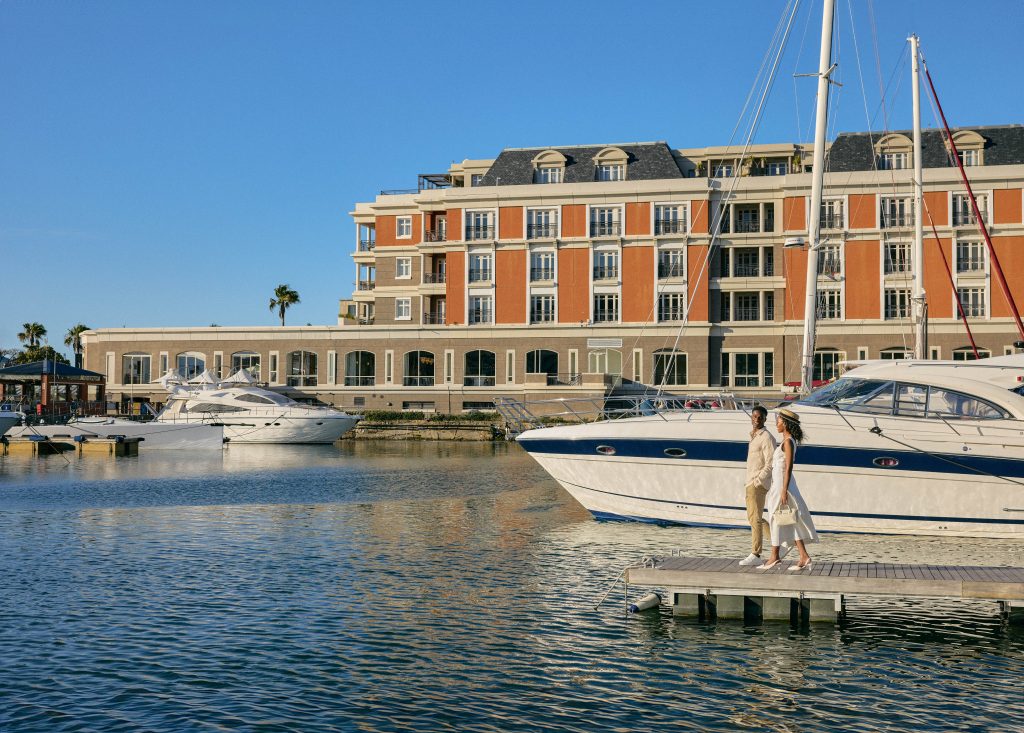
Cape Grace occupies a private quay between the working end of the V&A Waterfront and the yacht marina, which is an unusual position: you are inside the precinct without being on its busiest walkway. It is a Fairmont-managed hotel of 112 rooms and suites, and it has been one of the Waterfront’s benchmark addresses for decades.
Best for
Travellers who want the Waterfront on foot but a quiet room at the end of the day; couples and families who want a full-service hotel rather than an apartment; anyone building a Cape Town stay around the Waterfront, Robben Island and Table Mountain rather than the beaches.
It is not a design statement, and it is not the cheapest way to sleep inside the precinct. You are paying for the quay, the service and the room count.
Location
Cape Grace is on West Quay Road, on a spit of land with water on both sides. The Waterfront shops, the Two Oceans Aquarium, the food halls and the Nelson Mandela Gateway for the Robben Island ferries are all a walk away. The city centre is a short drive, the Table Mountain cableway ten to fifteen minutes in normal traffic, and Camps Bay about twenty.
Rooms and style at Cape Grace
There are 112 rooms and suites, from harbour-view rooms up to multi-bedroom suites and two signature suites. Aspect is the main variable: marina, harbour and mountain outlooks are genuinely different experiences and are priced accordingly. Ask what your room faces rather than relying on the category name.
Facilities at Cape Grace
There is a restaurant, a bar, a spa and a pool set away from the main walkways. The rest of what you need is the precinct itself, which is the point of staying here: Cape Grace works as a base you can leave on foot in any direction.
Who should consider Cape Grace
Consider it if the Waterfront is going to carry most of your Cape Town days and you would rather not drive. Cape Grace suits a three- or four-night stay where the aquarium, the Robben Island ferry, a harbour cruise and the cableway are all reachable without a car.
Trade-offs, honestly
No property suits every trip, and Cape Grace is a better fit for some than others. These are the points worth weighing before you book.
Price positioning. This sits at the top of the Cape Town market. The quay and the service are what you are paying for, not square metres.
A precinct, not a neighbourhood. The Waterfront is managed, secure and tourist-facing. Some travellers love that; others find it sealed off from the city.
Aspect matters more than category. A room facing the wrong way in a hotel bought for its water views is a poor use of money.
Wind. The harbour is exposed to the south-easter, strongest from roughly November to February.
Explore the area
- V&A Waterfront: what is actually there
- Where to stay in Cape Town: which area suits you
- Table Mountain: routes, cableway and timing
- Western Cape accommodation guide
Getting there and getting around
Cape Town International is roughly 22 km away, usually 25 to 40 minutes depending on traffic. The Waterfront has its own MyCiTi stop and e-hailing is plentiful. A hire car is useful for the Peninsula, the Winelands and the Whale Coast but is not needed for a Waterfront-based few days at Cape Grace, and parking in the precinct is charged.
How Cape Grace compares
Against a Sea Point or Camps Bay hotel, you trade the sea-facing promenade for the precinct on your doorstep. Against the City Bowl, Cape Grace gives up the restaurant scene of Bree and Kloof Streets and gains security, water and walkability. Against a Waterfront apartment, you gain a restaurant, a spa, a pool and a front desk.
Practical notes for a stay at Cape Grace
The Waterfront is the easiest part of Cape Town to use without a car. The Robben Island ferries leave from the Nelson Mandela Gateway and sell out in high season, so book them online before you arrive rather than on the day. Harbour and sunset cruises leave from the same basins.
The precinct is at its busiest between mid-morning and early evening, and quietest early. A walk around the marina before breakfast is one of the better free things to do in the city.
Seasonally, December to February is hot, busy and expensive, with the strongest wind. March and April are warm and calmer. May to August is wet, quiet and much cheaper, and the Waterfront’s indoor attractions carry those days better than the beaches do.
Before you book Cape Grace
Confirm the room aspect in writing if the view is part of the reason you are booking. Ask whether breakfast is included in the rate you are quoted, and what parking costs per day if you are hiring a car. Book Robben Island and the cableway separately and early. Confirm the current cancellation window at checkout, since it varies with season and rate type.
Current rates and availability
We do not publish rates for Cape Grace, because they move constantly with season and demand. Use the availability button on this page to see what the property currently costs on your dates, what is included and what the cancellation terms are. The booking provider is the merchant of record; Cape Town Travel Guide does not set prices, hold inventory or take payment.